On this page
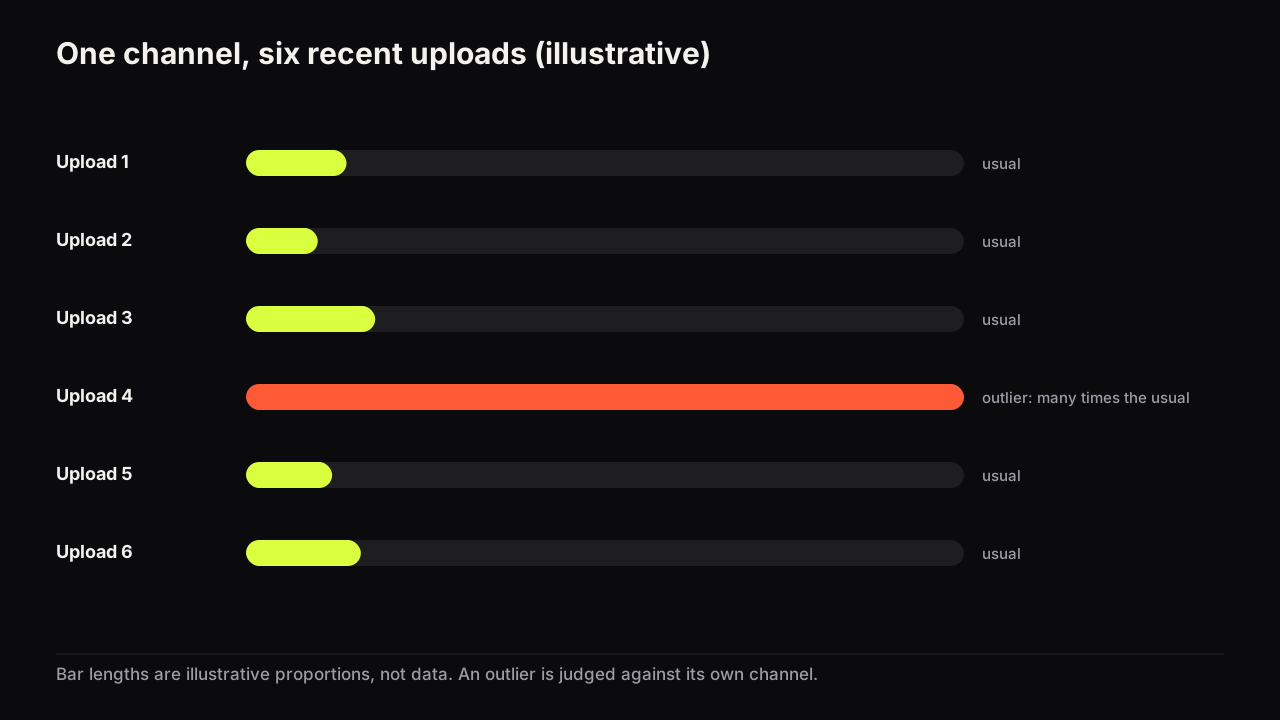
An outlier video on YouTube is a video whose views far exceed what its own channel usually gets. The comparison is within the channel, never across YouTube: two hundred thousand views is an outlier on a channel that usually reaches ten thousand and an ordinary upload on a channel that usually reaches a million. An outlier score is that comparison written as a ratio: the video's views divided by some measure of the channel's usual views. Tools disagree on the score for the same video because each one picks its own baseline, its own window of uploads and its own way of adjusting for age. The idea is sound. No particular number is.
Why the outlier idea matters
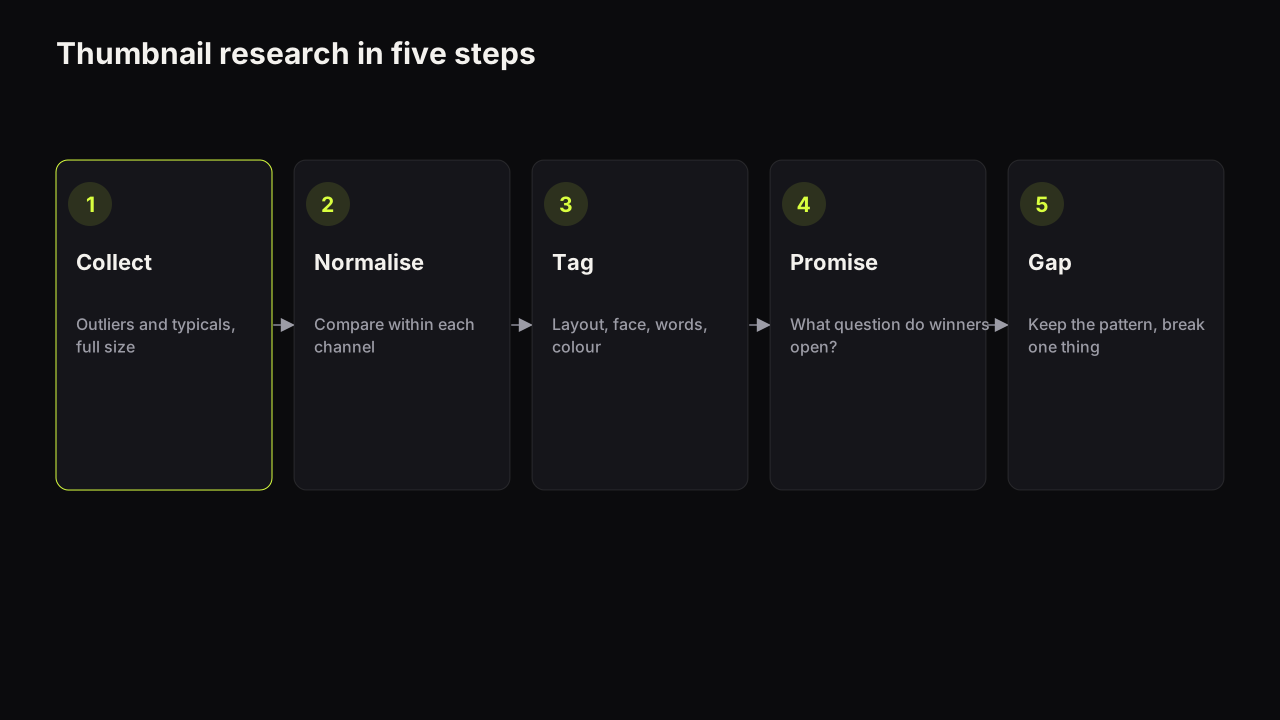
An outlier is the unit of thumbnail research because it isolates the package. The channel, the audience and the production were roughly the same for the ordinary uploads around it, so whatever the outlier did differently happened mostly in the topic, the title and the cover. Study enough of them across enough channels and the niche's patterns stop being a mystery; the method, from collecting to tagging to finding the gap, is the guide to competitor thumbnail research. This piece is about the definition and the number, because both get misused.
Why two tools give two scores for the same video
Every outlier score is views divided by "usual", and "usual" is a choice. Four choices account for most of the disagreement.
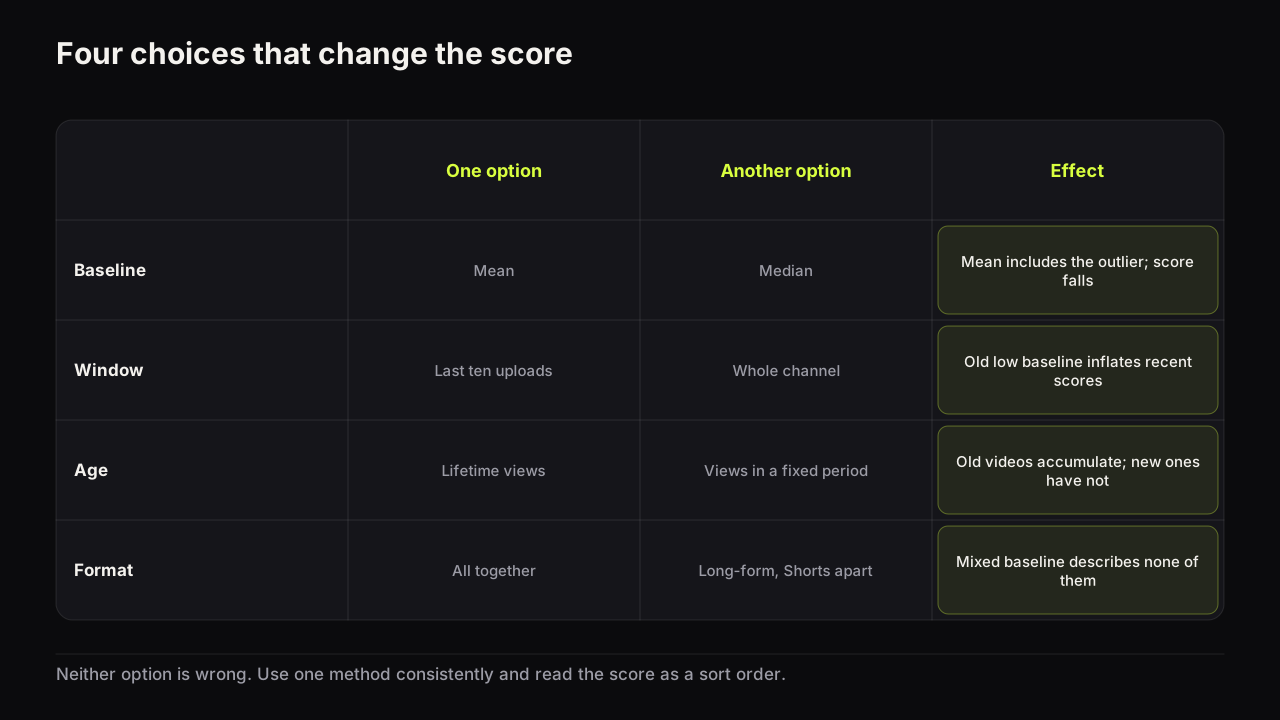
| Choice | One option | Another option | Effect on the score |
|---|---|---|---|
| Baseline | Mean of recent uploads | Median of recent uploads | The mean includes the outlier itself and rises with it, so the score falls |
| Window | Last ten uploads | Last year, or the whole channel | A growing channel's old baseline is low, so recent uploads all look like outliers |
| Age | Total views to date | Views in a fixed period after upload | Old videos accumulate; new ones have not had time |
| Format | Everything counted together | Long-form, Shorts and streams separated | Mixed formats give a baseline that describes none of them |
A worked example, with invented numbers, shows how far the choices move the answer. Suppose a channel's last ten uploads include nine at around ten thousand views and one at a million. The median is about ten thousand, so the big video scores roughly one hundred times usual. The mean is over a hundred thousand, because the big video is in it, so the same video scores under ten times usual. Nothing about the video changed; two reasonable definitions of "usual" produced numbers an order of magnitude apart.
Age does something similar. A video from four years ago has had four years to gather views; one from last month has had one. A tool that compares lifetime totals ranks the old video first and may miss the new one, even though the new one is the stronger signal about what the audience wants now. A tool that compares views in the first weeks after upload sees the new one and undercounts the old.
If we had to pick, we would use the median of the last ten long-form uploads, with each video's views counted over its first month, even though that baseline makes a slow-burning video invisible and treats a channel that posts monthly and a channel that posts daily as if ten uploads meant the same thing. The median ignores the outlier itself, the fixed month puts old and new uploads on one footing, and the long-form-only rule stops a run of Shorts from dragging the baseline down to nothing. It is a blunt rule, applied the same way to every channel on the list, which is all a sort order needs.
We name no tool's formula here, and none of the choices above is wrong. Each answers a slightly different question. What matters is that you use one tool, or one manual method, consistently across the channels you are comparing, and that you read the score as a sort order rather than as a finding. "This is the video that stood out most" is safe; "this video is 14 times better" is not.
What an outlier can tell you, and what it cannot
It can tell you that this package did something with this audience that the channel's other packages did not. Repeat the observation across many channels and the shared features become a pattern: a layout, an expression, a kind of question the cover opens. That is the whole value.
It cannot tell you why. The candidates are the topic, the title, the cover, the timing and outside help, and a view count does not separate them.
- Views are not clicks. A view count blends every surface and every source, and YouTube's help page on impressions and click-through rate says the rate varies with where impressions come from. You cannot see another channel's CTR, so an outlier says the package worked in aggregate, not that the thumbnail did; what CTR measures and what it cannot is the fuller account.
- The cover you see may not be the cover that won. Creators refresh the thumbnails on their best videos; an old outlier may be wearing its third cover.
- The topic and title share the credit. Read the title beside the cover every time, because title and thumbnail split one promise and you are studying the split.
- Timing and survivorship are invisible. A video that rode a news cycle looks the same in the list as one that won on packaging, and you never see the similar covers on other channels that failed.
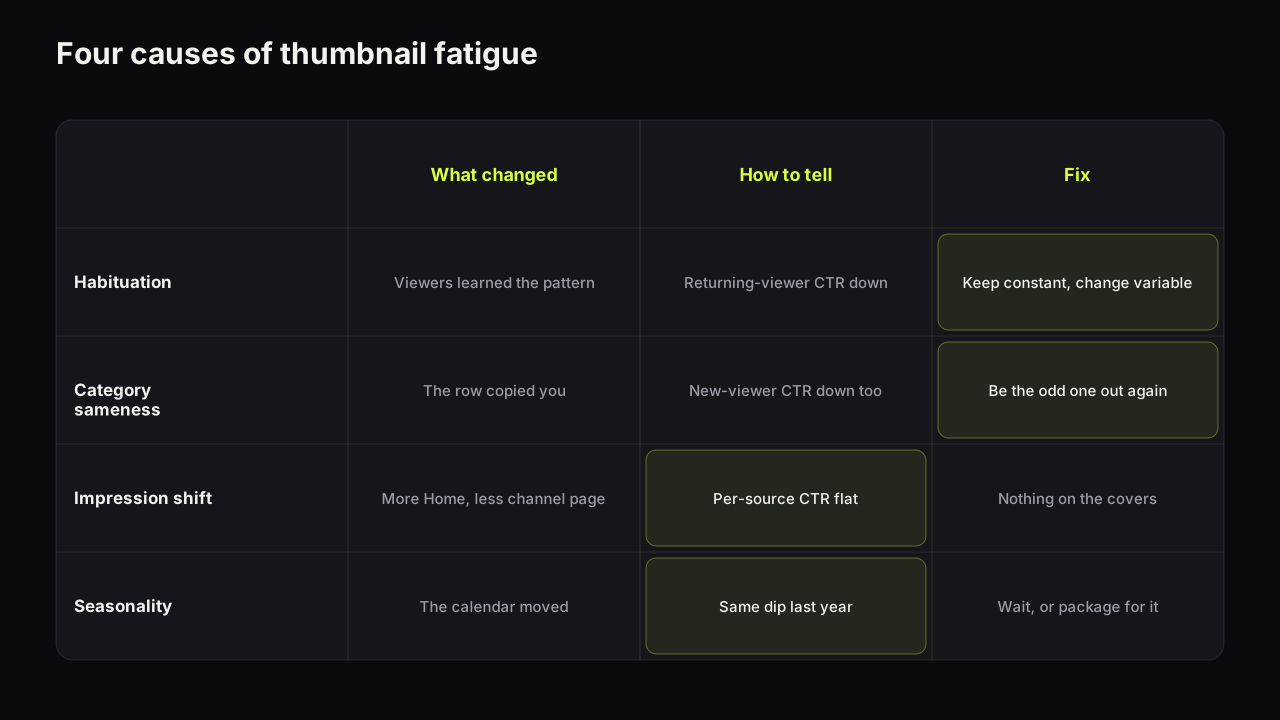
In the niches we look at, a channel's outliers tend to cluster around one style, and that style then spreads to its ordinary uploads and to its competitors. Within a year the outliers of two years ago look like the niche's uniform, which is one reason a swipe file needs dates on every entry. When a style stops working is the follow-on: yesterday's outlier pattern is often today's fatigue.
How to find outliers by hand
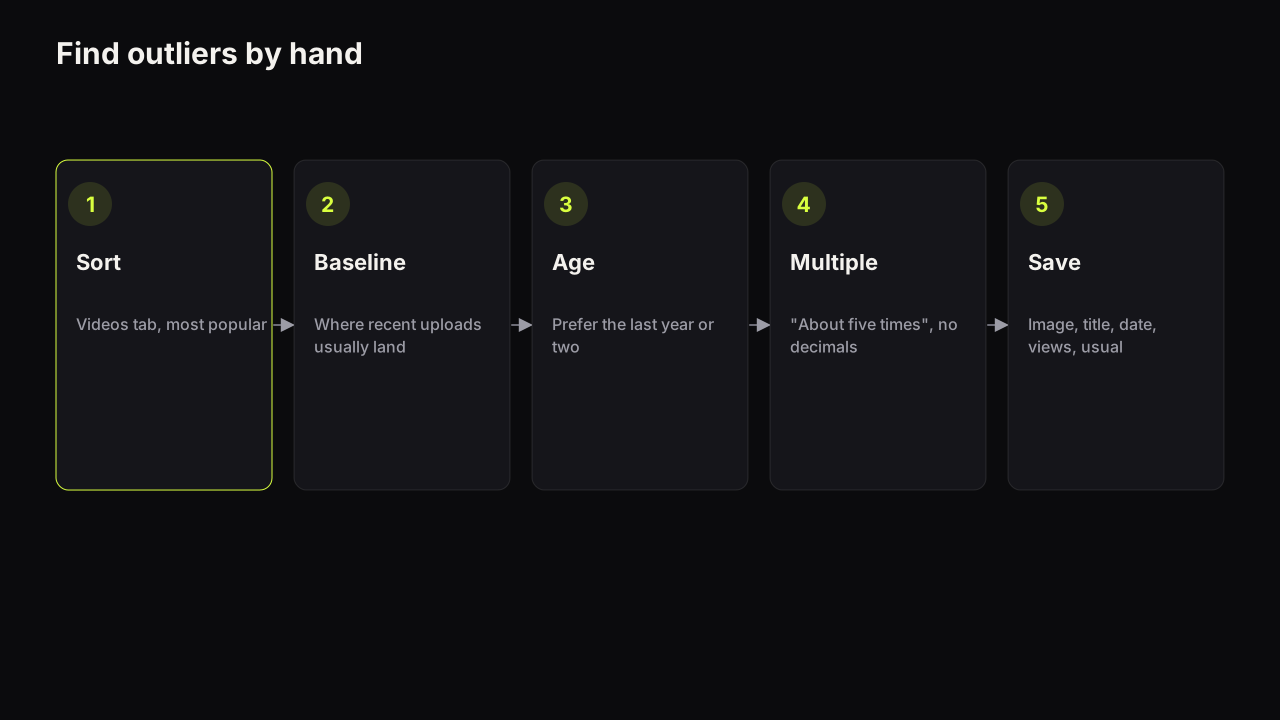
- Open the channel's Videos tab and sort by most popular. The top of the list is the candidate set.
- Read the channel's usual views. Scroll the recent uploads and note where most of them land. That is your baseline, by eye.
- Note each candidate's age. Prefer videos from the last year or two; an old video at the top may simply be old.
- Write the rough multiple. "About five times usual" is enough. Do not compute a precise figure; the precision is false.
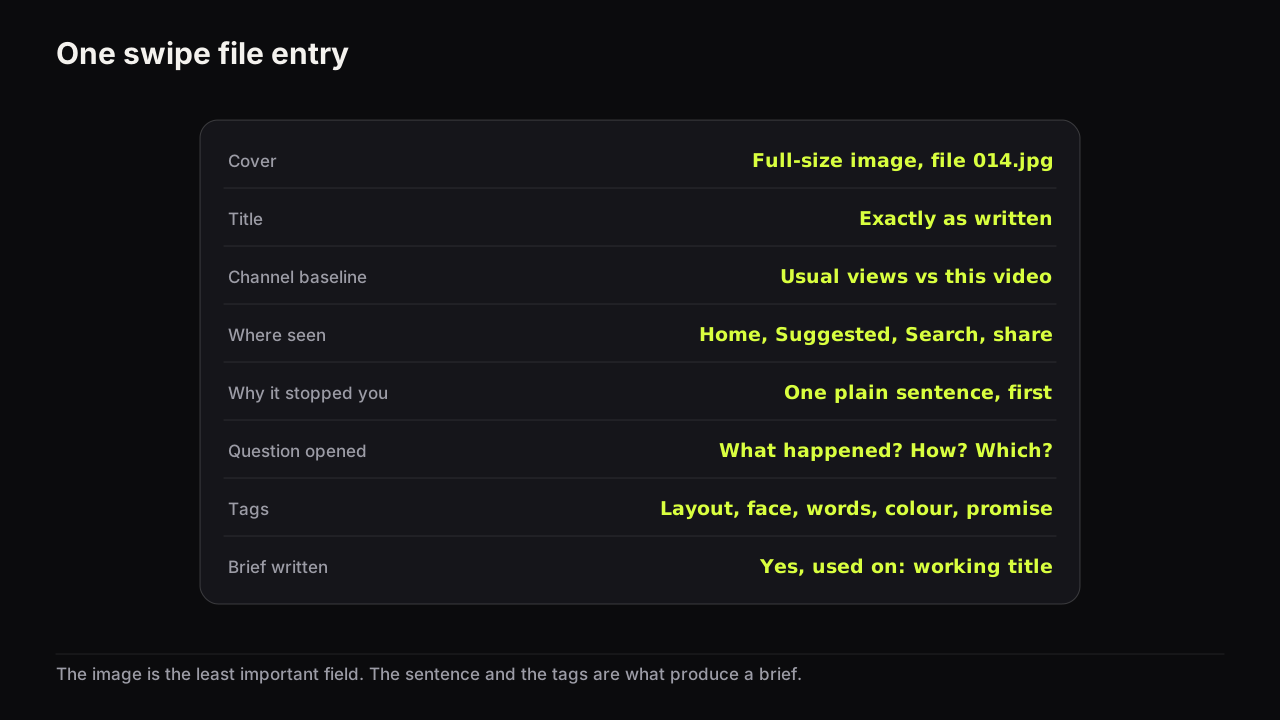
- Save it with the title. Full-size image, title, date, views and the channel's usual views. The free thumbnail downloader returns the full-size file from a video link with no account, and the entry goes into a swipe file organised by pattern rather than by picture.
Start with your own channel. Your own outliers are the only ones whose CTR, traffic sources and retention you can see, which turns "this package worked" into "this package worked on Browse with strong retention", and that is a finding you can build the next cover on.
What to do with an outlier once you have one
Borrow the layout, never the cover. The pattern an outlier shares with other outliers (face right and number left, a calm expression on a verdict video, a light cover in a dark niche) is an idea the niche has tested for you. The image, the person and the words are theirs; copying them is a copyright and likeness problem, and a cover that promises someone else's video runs into YouTube's deceptive practices policy.
Say the outlier on a home-repair channel is a cover with a burst copper pipe filling the left half, a wincing face on the right at about half the height, the words £2,300 in yellow on a dark blue ground, and a title that reads "The plumber quoted me £2,300. I fixed it for £14." The viewer infers a big saving and a story about being overcharged. The thing worth borrowing is the pairing of a damaged object with a price: for your own video on a leaking radiator valve, that becomes your radiator, your face, your number, and whichever colour the row is not using this month. The copper pipe, the person and the £2,300 stay with the video they belong to.
On the bench, pasting a YouTube link fetches that video's thumbnail image as the source for a remake with your headline, your style and your face. It does not read the video's views, title or analytics; it is a way to rebuild a layout that works in your niche around your own promise, and to remake your own past covers. Explore shows covers made on the bench by niche, each with a Remix action, if you want a layout without a link.
Common questions
Is an outlier the same as a viral video?
No. Viral describes a large absolute number of views. An outlier is relative to its own channel, so a video with modest views can be an outlier on a small channel, and a video with millions of views can be an ordinary upload on a large one.
How many times the usual views makes a video an outlier?
There is no agreed figure. "Several times the channel's usual" is the working idea; every tool sets its own cut-off, and the score for the same video changes with the baseline and window the tool uses. Treat any cut-off as a way to sort a list, not as a finding.
Do I need a tool to find outlier videos?
No. A channel's Videos tab sorted by most popular, read against the view counts of its recent uploads, shows you the outliers in a few minutes. Tools save time across a large niche; the manual method teaches you the niche while you do it.
What to do next
Pick three channels adjacent to yours, find each one's outliers from the last two years by hand, and write the rough multiple and the title next to each. Then read your own channel's top videos the same way, with the CTR and traffic sources you can see. When the same layout or the same kind of question shows up on both lists, that is the pattern to build the next cover around.