On this page
Open the Videos tab of a channel one size above yours and sort by most popular. Somewhere near the top there is a video with several times the views of everything around it, on a topic that was not obviously special, under a title that was not obviously searchable. That video is the most useful thing on the page, and most creators scroll past it because they came to look at the pretty covers.
Competitor thumbnail research is the practice of finding those videos across your whole niche, working out what their covers have in common, and using the pattern, never the image, in your own packaging. The unit of study is the outlier: a video that far exceeds its own channel's usual view count. The method takes an afternoon the first time. The collecting is the easy part; the hard parts are being honest about what an outlier can tell you, and not lifting the picture when you meant to borrow the shape.
Why niche context beats universal rules
Every general thumbnail rule is a probability, and the probabilities differ by niche. Our study of 11,223 thumbnails from 1,043 top channels puts numbers on that: a face is on 89 percent of Fitness covers and 47 percent of Gaming covers, and the shocked face is one in four in Gaming and one in thirty in Fitness. The same data shows how many words top channels use, what changes as a channel grows, how little any single feature separates a channel's best cover from the rest, and what the titles of those best videos have in common. A shocked face lifts a reaction video and undermines a maths explainer. A single large number carries a finance cover and means nothing on a travel vlog. The YouTube thumbnail guide gives the rules that hold almost everywhere; research tells you which of them your audience responds to, and which conventions your niche has already settled.
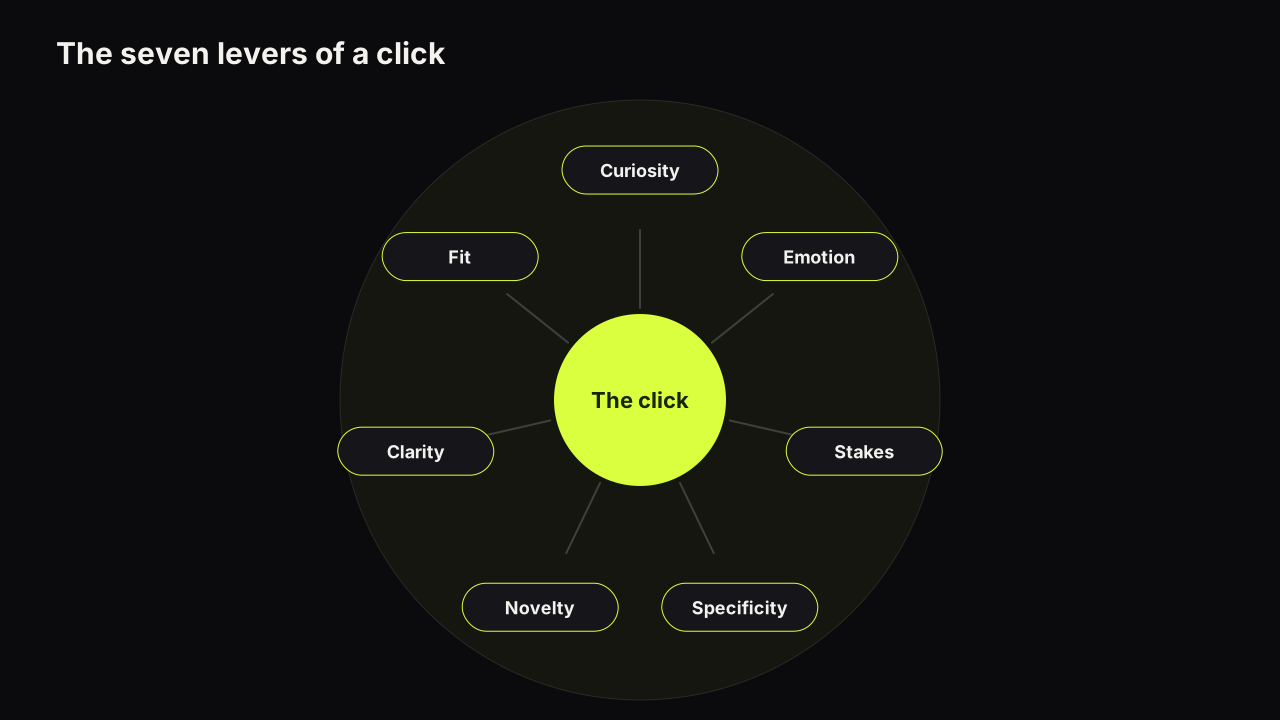
The bigger reason is that a cover is never seen alone. It sits in a row beside six to twelve neighbours, most from the same niche, and it is judged against them before it is judged on its own. You cannot know what "different from the neighbours" means until you have looked at the neighbours carefully. Two of the seven levers that make people click, expectation fit and pattern interruption, are defined entirely relative to what the niche already does.
Most creators who say "I've looked at the competition" have scrolled a feed. Scrolling produces impressions ("everyone uses red"); research produces counts ("eleven of fourteen outliers put the face on the right and the number on the left"). The difference is whether you wrote anything down.
The row I study most is the YouTube-growth and creator-tools niche, because it overlaps directly with what we build. The thing that becomes obvious when you look across it is how aggressively the best creators simplify the idea. The strongest covers are rarely the ones carrying the most information. They're the ones where you understand the tension, the benefit or the question almost instantly.
What an outlier is, and what it cannot tell you
An outlier is a video whose views are several times higher than the channel's usual. The comparison is within the channel, not across YouTube. Two million views on a channel that averages three million is an ordinary upload. Two hundred thousand on a channel that averages ten thousand is an outlier worth an hour of your attention.
The plain method needs no tool. Open a channel's Videos tab, sort by most popular, and compare each of the top videos with the view count the channel's recent uploads typically reach. Note the video's age. An old outlier had years to accumulate views that a recent one has not, so a video from the last year that sits far above the channel's recent uploads is the strongest signal, and a five-year-old video at the top of the list may simply be old.
An illustrative case. A channel's recent uploads settle around fifteen thousand views. Its most-popular list has a video at a hundred and twenty thousand from eighteen months ago and one at sixty thousand from ten weeks ago. The first has the bigger multiple. The second is the better entry, because it did its work recently, against the same feed you are about to upload into. Keep both, write "old" beside the first, and study the second.
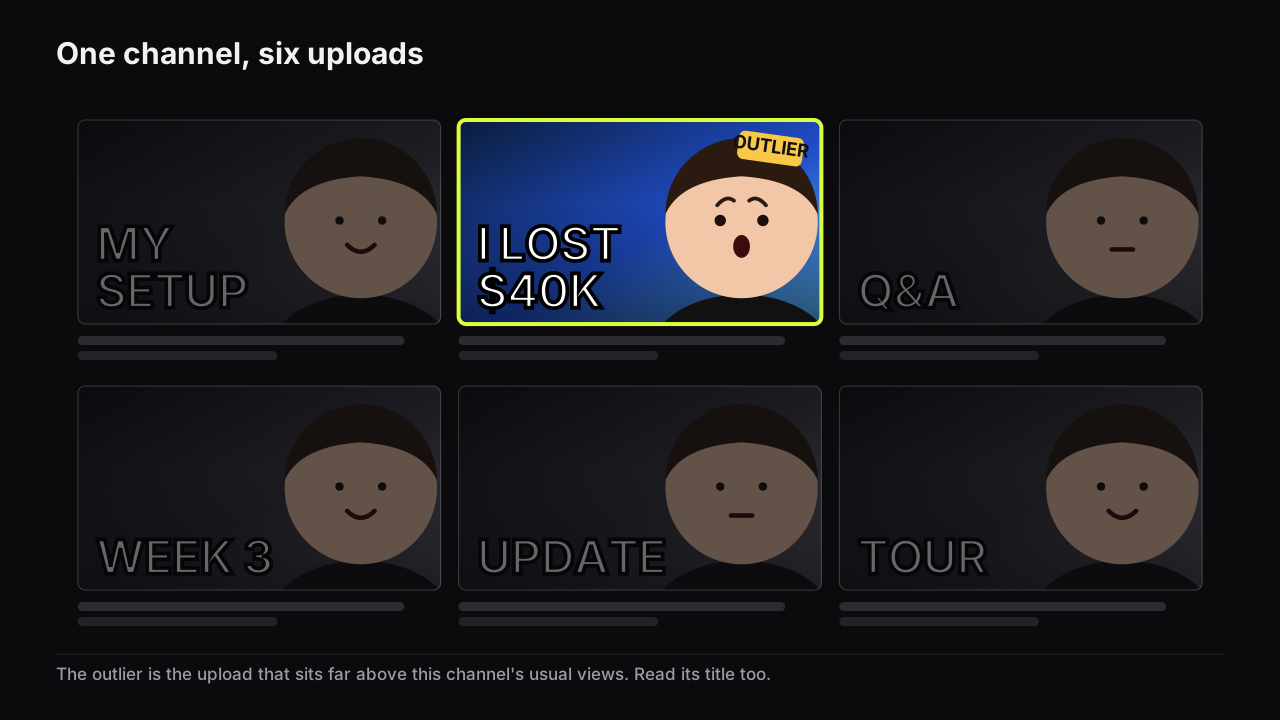
Outlier research is often oversold. The limits:
- Views are not clicks. A view count blends every surface the video appeared on, and YouTube's help page on impressions and click-through rate notes that CTR varies with where impressions come from. You cannot see a competitor's CTR. An outlier tells you the package worked in aggregate, not that the thumbnail did.
- The title and topic share the credit. An outlier may have won on a subject the audience was waiting for, on a title that was easy to search, or on being picked up outside YouTube. Read the title beside the cover, every time. How title and thumbnail split the promise is part of what you are studying.
- The cover you see may not be the one that won. Creators refresh thumbnails on their best videos. The cover on an old outlier today may be its third.
- Timing is invisible. A video that rode a news cycle looks the same in the Videos tab as one that earned its views on packaging.
- Survivorship. You see the covers that worked. You do not see the twenty similar covers on other channels that failed, so a pattern shared by outliers is not automatically the cause.
You may see outlier tools quote precise multipliers or thresholds for what counts as an outlier. Use whatever cut-off helps you sort, but do not treat any number as a finding. The idea is a comparison, not a formula.
The way through is volume. One outlier is a story. Twenty outliers that share a layout are a pattern, and a pattern that repeats across channels with different topics and titles is probably about the cover.
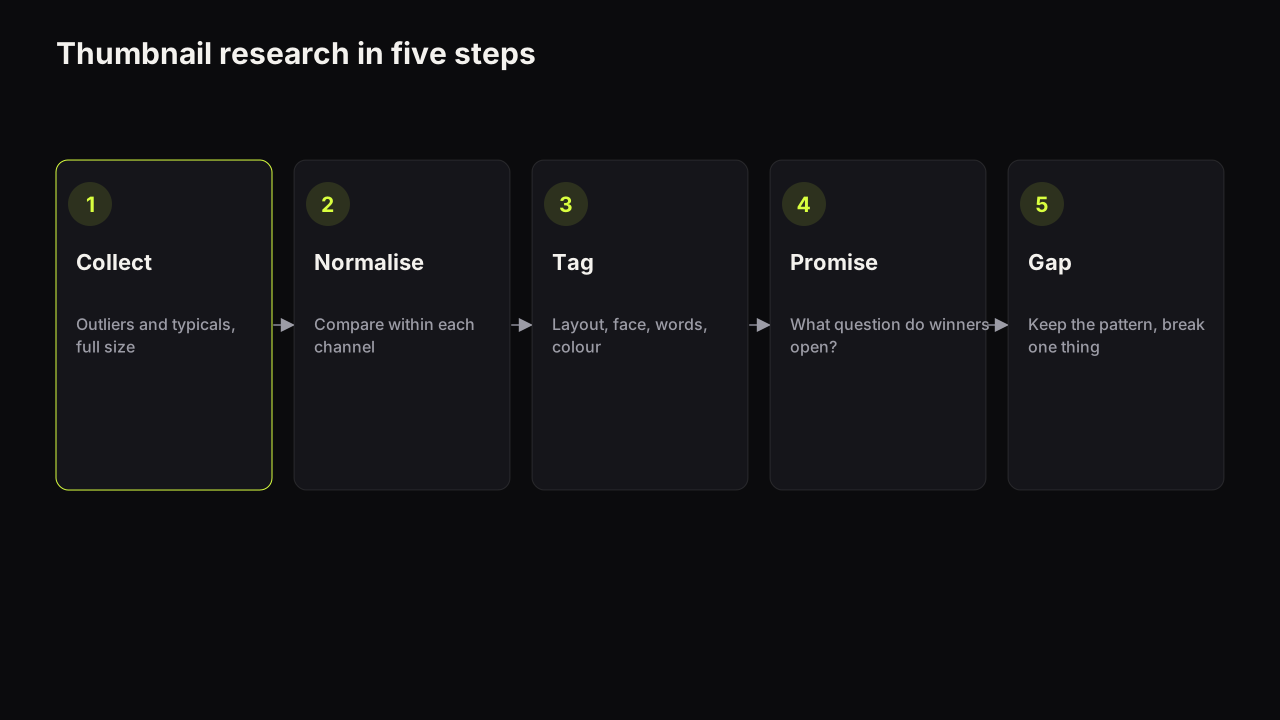
The five-step method
Each step has a why, a how, and a done-when. Budget an afternoon for the first pass.
Step 1: collect
Why: a niche is a set of channels, not one competitor, and you need the ordinary covers as well as the outliers to see what the outliers do differently.
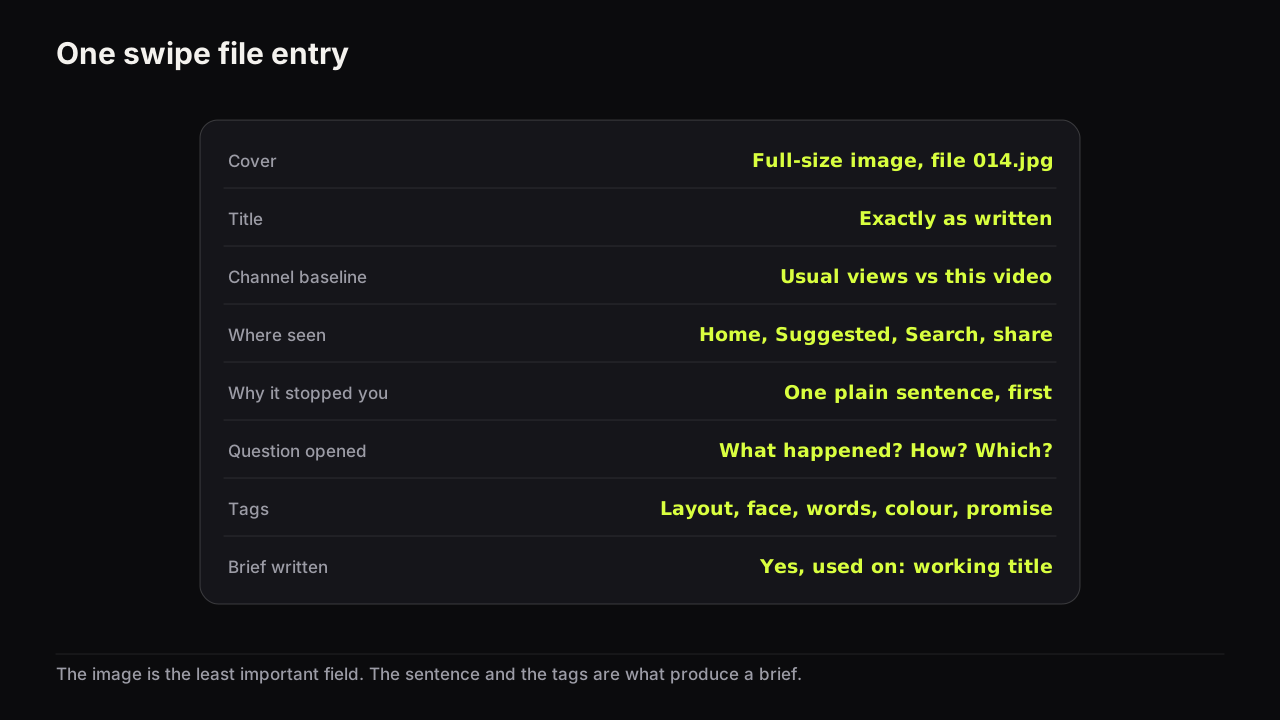
How: list eight to twelve channels adjacent to yours, including two or three one size band above you. For each, save the outliers from the last year or two plus three or four typical recent covers. Save the full-size image rather than a screenshot of a grid; the free thumbnail downloader takes a video link and returns the full-size file with no account. Record the title, the upload date, the views, the channel's usual view count, and where you saw the video.
Done when: you have a few dozen entries, roughly half outliers and half typical, each with the title beside the image. This is the raw material of a swipe file that produces briefs rather than screenshots, and the same file serves both jobs.
Step 2: normalise
Why: raw view counts compare channels, which is meaningless. The signal is each video's distance from its own channel's normal.
How: for each outlier, write the multiple of the channel's usual views (roughly, "about five times") and the age. Next to it, write every reason other than the cover that might explain the win: a hot topic, a searchable title, a collaboration, a mention elsewhere. Drop the entries where the other reasons are obviously sufficient. Keep the ones where the topic was ordinary and the package still won.
Suppose one entry on a home-repair channel has six times the channel's usual views and is titled with the exact phrase people type when a dishwasher stops draining. Cross it out. Search demand explains the win before the cover gets a chance to. The entry you want is the one two rows down: an unglamorous topic, a plain title, and still four times the usual. Whatever that cover did, it did on its own.
Done when: each remaining outlier has a note that reads "topic ordinary, title plain, cover did the work" or something close to it.
Step 3: tag the patterns
Why: patterns are counts, and counts need consistent categories. Tag every entry, outliers and typicals alike, with the same short vocabulary.
How: use one tag per dimension.
| Dimension | Tags to choose from |
|---|---|
| Layout | Face right and text left; face left and text right; face centre; split screen; object only; before and after |
| Face | None; small (under a third of the height); large (a third or more); extreme close-up |
| Expression | Shock; smile; doubt; calm; sad; none |
| Headline | None; a number; one to three words; four or more words |
| Object | None; product; document or screen; place; person other than the creator |
| Dominant colour | Warm; cool; dark; light; saturated |
| Promise type | Outcome; contradiction; unusual specific; how-to; versus |
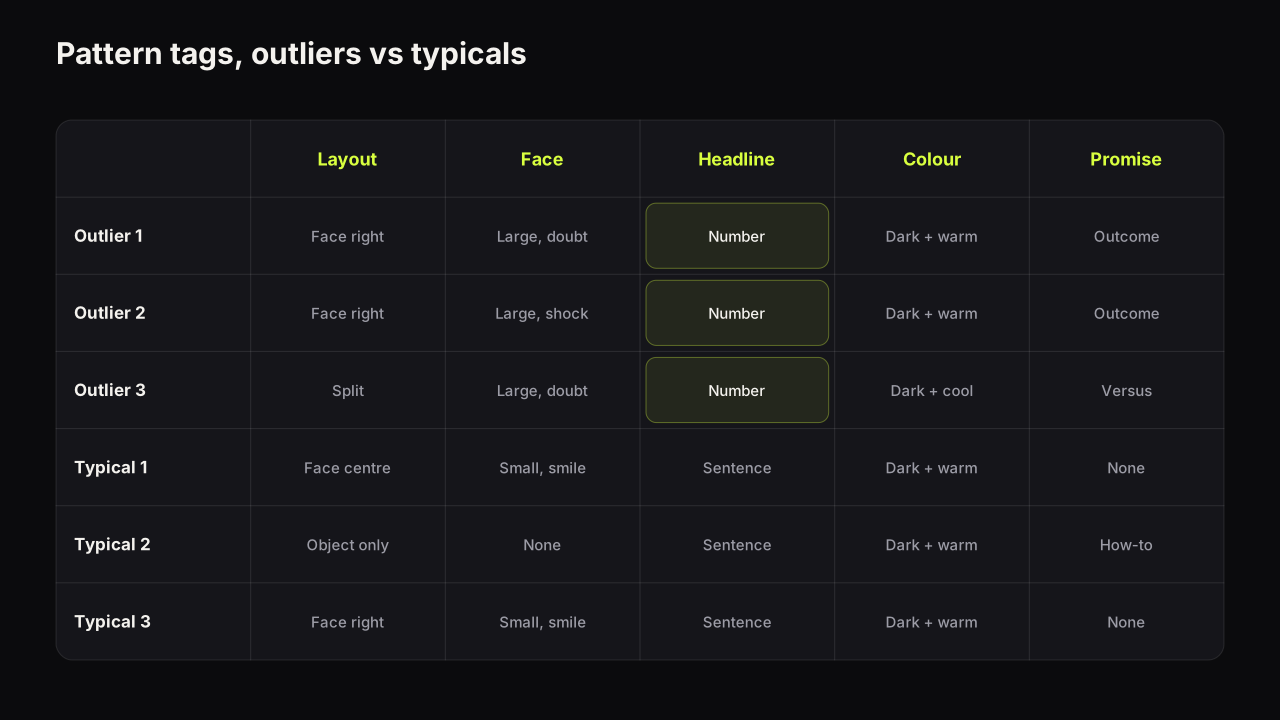
Then count. For each dimension, how often does each tag appear among the outliers versus the typicals? A tag that appears in most outliers and few typicals is a candidate pattern. A tag that appears in both equally is the niche's uniform, not a lever.
Done when: you have a count per tag for both groups and can point at the two or three tags where the outliers differ most from the typicals.
Step 4: find the shared promise
Why: layout and colour are the surface. What an outlier shares with another outlier is usually the kind of question it opens.
How: for each remaining outlier, write the question a viewer would ask on seeing the cover and title together: "what happened?", "how is that possible?", "which one?", "is that true?". Group the questions. In most niches one or two question types account for most of the outliers. Then look at the typicals and write their questions. Often the typical cover asks no question at all, because it describes the video instead of opening it.
Done when: you can complete the sentence "In this niche, the covers that win open a [question type] by showing [the visual device], and the ordinary covers mostly [what they do instead]."
Step 5: find the gap
Why: copying the pattern gets you into the niche's uniform. Winning needs the pattern plus a difference the audience will still accept.
How: lay ten typical covers from the niche in a row (a grid view in any image viewer is enough) and ask what a new cover could do that fits the niche's promise but breaks its look. The common gaps are colour (a light cover in a dark niche, a cool one in a warm niche; the reasoning is in our piece on colours and contrast that survive a phone screen), face size (everyone small, you large, or the reverse), and headline type (everyone a sentence, you a number). Pick one gap. Two gaps at once and you have left the niche's expectations.
The gap you find first is not always the gap to take. Illustrative case: fourteen outliers from a home-repair niche. Twelve are dark, all fourteen have a face at about a third of the height, eleven put the tool or the broken part large in the foreground. The obvious gap is brightness. Then you check the dates and notice the two largest channels on your list went light within the last quarter. That gap is closing. Take the second one instead: stay dark, keep the face, and make the headline a figure (what the repair cost) where the whole row uses a verb.
There is also a case for taking no gap at all. A brand-new channel in a search-led niche has no recognition to spend, and expectation fit is the only lever it can pull with confidence. For the first handful of uploads we would match the uniform completely and open the gap once there is a baseline to measure it against. The rule is "pattern plus one difference"; the exception is a channel that does not yet know the pattern from the inside.
Done when: you have a brief (next section) that names the pattern you are keeping and the one gap you are exploiting.
We would re-run steps 1 to 3 every month or two on the new outliers only, even though most months it confirms what you already knew and feels like wasted time. The reason is that niches converge. The gap you found becomes the uniform within a year as other channels find it too, and the tag counts are the only way to notice that before your own CTR does. Our piece on when a style stops working covers what to do once the counts show your pattern has become everyone's.
Borrow the layout, never the cover
There is a line in this work, and it is worth drawing precisely.
A layout is an arrangement: where the face sits, where the words go, how large each is, which direction the eye travels, what kind of object anchors the frame. A cover is the image itself: the photograph, the person, the artwork, the specific words in the specific type. Layouts are ideas, and the whole niche shares them already. Covers belong to the creators who made them.
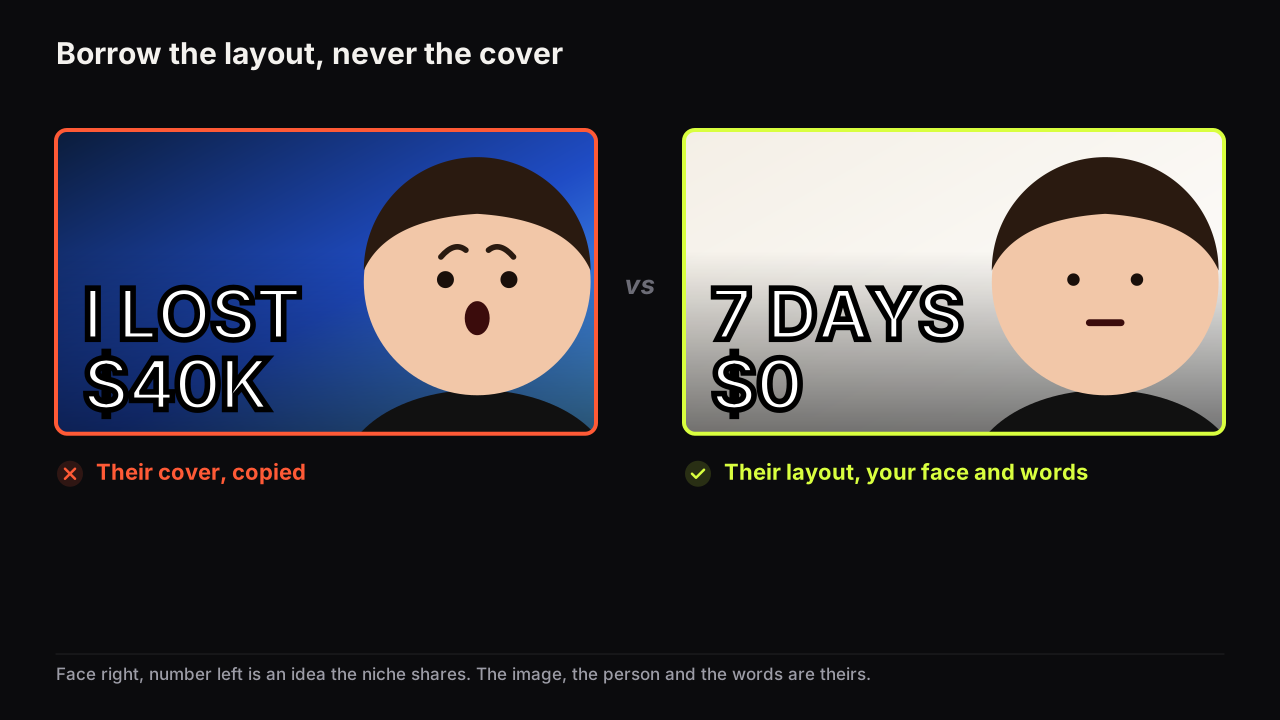
Borrowing the layout means: face on the right at half the height, a number on the left, a dark background with one warm accent. Then your face, your number, your video's colour. Copying the cover means lifting the image, the person, the composition down to the pose and crop, or the distinctive words. The second is a copyright problem for the image and a likeness problem for the person. It is also a packaging problem: YouTube's thumbnails policy points to the spam, deceptive practices and scams policy for thumbnails that promise content the video does not contain, and a cover borrowed from someone else's video promises someone else's video.
Rights are your responsibility, and we are not giving legal advice. The practical test: if someone in the niche could recognise whose cover yours was based on, you copied it. If they could only say "that's the layout everyone uses", you borrowed it. The same applies to fonts (check the licence) and to faces (only people who agreed to appear on your thumbnails).
We would hold to layout-not-cover even in the cases where copying would be safe, such as remaking a friend's cover with their blessing, and even though the borrowed version takes longer to make. A copied cover makes you the second channel with that image. The audience has already seen it, so the novelty lever is spent before your video is shown. A borrowed layout with your own face and a fresh headline keeps the niche's expectation fit and gives the row something it has not seen. The safer path and the stronger path happen to be the same one.
Turning findings into a brief
Research that ends in a spreadsheet is a hobby. Each finding should become a brief you can hand to yourself, an editor or a generator.
| Field | Example (finance niche) |
|---|---|
| Promise type | Outcome with stakes ("what it cost me") |
| Layout | Face right, headline left, object bottom left |
| Face and expression | Large, doubt rather than shock |
| Headline | A single number, no more than three words total |
| Object | The document or screen that proves the number |
| Dominant and accent colour | Dark blue with one warm accent |
| The gap being exploited | Light cover; the niche runs dark |
| What to avoid | The niche's uniform shocked face and red arrow |
| Reference entries | Swipe file rows 12, 19, 31 |
That table is also a prompt. The brief structure for a thumbnail prompt maps almost field for field onto it, which is not a coincidence: a good research finding and a good generator brief describe the same thing, a layout with a promise, minus the picture.
On the bench there is a shortcut for the layout half. Paste a YouTube link into the maker and it grabs that video's thumbnail image as the source, then renders the layout again with your headline, your style and your own face from Face Lab. It does not read the video's title, views or channel data, and it does not connect to a YouTube account. It takes the image as a layout reference, which is what the research step needs and nothing more. Use it on the outliers whose layout you want to keep, and on your own past covers you want to refresh. The face in the render must be yours or that of someone who agreed to appear on your thumbnails, and the words and the colours should come from your brief, not from theirs.
Explore is the other source of layouts, and it sidesteps the copying question entirely: every cover there was made on the bench, is filterable by niche, and has a Remix action that opens it with your face and headline.
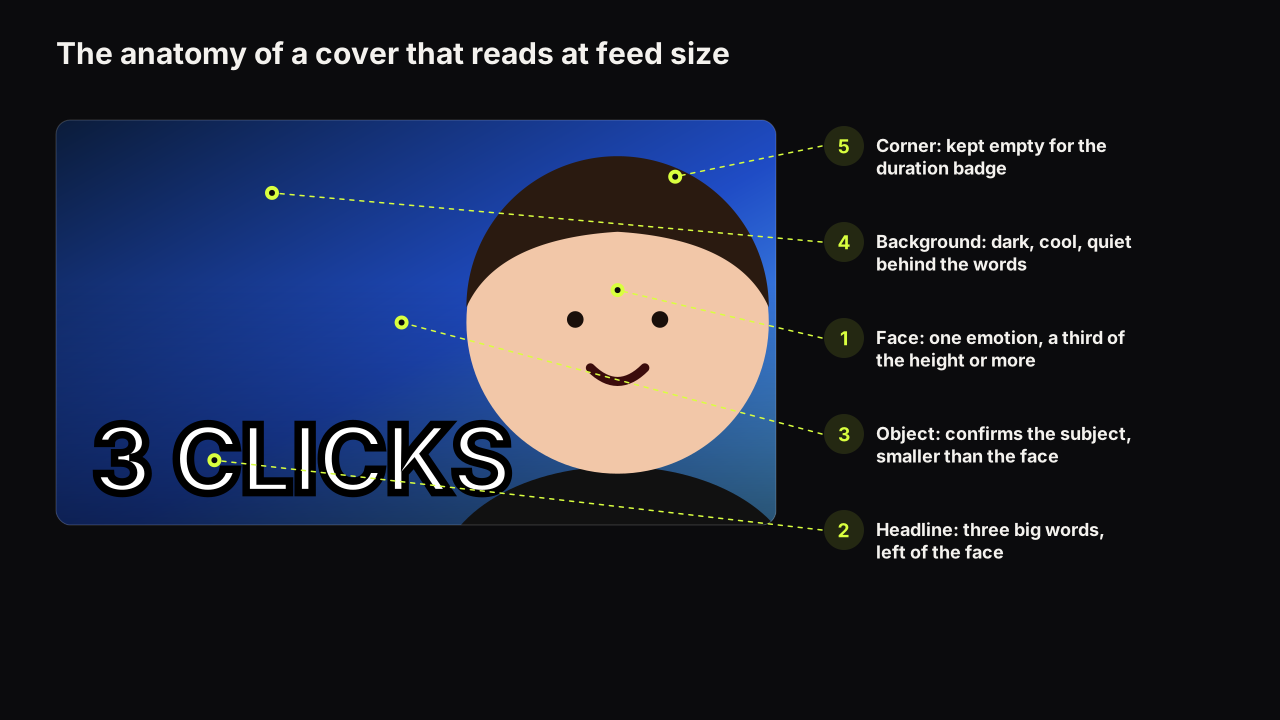
A remake of a competitor's layout is a starting point for a variant, not a finished cover. Run it through the same design principles you would apply to anything else: one idea, three elements, readable at feed size, a face that separates from the background.
Keeping the research alive
The first pass tells you the niche's current rules. The value compounds when you keep going, because you then see the rules change.
- Log new outliers monthly. Ten minutes per channel on your list. Tag them the same way.
- Watch the tag counts drift. When a gap you found starts appearing in the typicals, it has become the uniform. Time to find the next one.
- Feed the findings into tests. A pattern from research is a hypothesis. A Test & Compare run on your own video is how it becomes a rule for your channel. Research tells you what to test; it does not replace the test.
- Check your own outliers. Your best videos are entries too. Same tags, same questions. The pattern you find in your own outliers is the one you already know how to make.
On tools: we would do the first pass by hand even though a third-party outlier tool would list the candidates in minutes. The tool hands you a score and hides the normalisation, and the normalisation is where the judgement lives. Once you know the niche from the inside, a tool is a fine way to keep the monthly log short.
If it were our channel
Say we ran a mid-sized home-cooking channel and were doing this for the first time. We would pick ten channels: six at our size, two smaller ones that punch above their weight, two a band above. One afternoon, downloader open, spreadsheet open. For each channel, the top five from the last two years plus four recent typicals, title beside every image.
Normalising would probably remove a third of the outliers straight away: the ones with a searchable recipe name in the title, any collaborations. We would keep the ones where a dull dish still won, and write the promise sentence from step 4 before looking at any gap.
If the row turned out to be warm-toned close-ups of the finished dish with no face, we would see two gaps: a cool ground, or a face where the row has none. We would take the cool ground first, because it changes the first pass without asking the audience to accept a different kind of video, and hold the face in reserve for the month the count shows the row going cool. Then two covers for the next upload, one at the pattern and one at the pattern plus the cool ground, and a test to decide rather than our taste. We would date the baseline, because in six months the row will have moved and we will want to know how far.
Common questions
Is it legal to use a competitor's thumbnail as a reference?
Studying a cover and adopting its layout, its kind of promise or its colour logic is normal practice. Reproducing the image, the person's face or a distinctive composition wholesale is a copyright and likeness problem, and a cover that promises someone else's video also runs into YouTube's deceptive practices policy. Rights are your responsibility; when in doubt, keep the layout and change everything else.
How many videos do I need to collect?
Enough that patterns repeat. In practice a few dozen entries across eight to twelve channels is the point where the same layouts and promises start appearing more than once, which is what makes a tag count meaningful. Fewer than that and you are looking at individual videos, not a niche.
Do I need a tool to find outlier videos?
No. Open a channel's Videos tab, sort by most popular, and compare each top video's views with what the channel's recent uploads usually get. Several third-party tools list outliers automatically and can save time on large niches, but the manual method teaches you the niche while you do it.
What to do next
- Write the list of eight to twelve channels tonight. Include two above your size band.
- Spend one afternoon on steps 1 to 3 and stop when you have a tag count. Do not skip the typicals; without them the outliers have nothing to differ from.
- Write the promise sentence from step 4 and pin it above the desk. It is the most useful sentence in your channel's brief.
- Pick one gap, write the brief, and make two covers for your next upload: one on the niche's pattern, one on the pattern plus the gap. That pair is your next test.
- Set up the swipe file so the next month's outliers have somewhere to go.
The word this method leans on most is defined properly in what an outlier video is and why tools disagree on the score.
When a pattern spreads across the niche, how to tell a trend from a fad decides whether to adopt it, adapt it or ignore it.