On this page
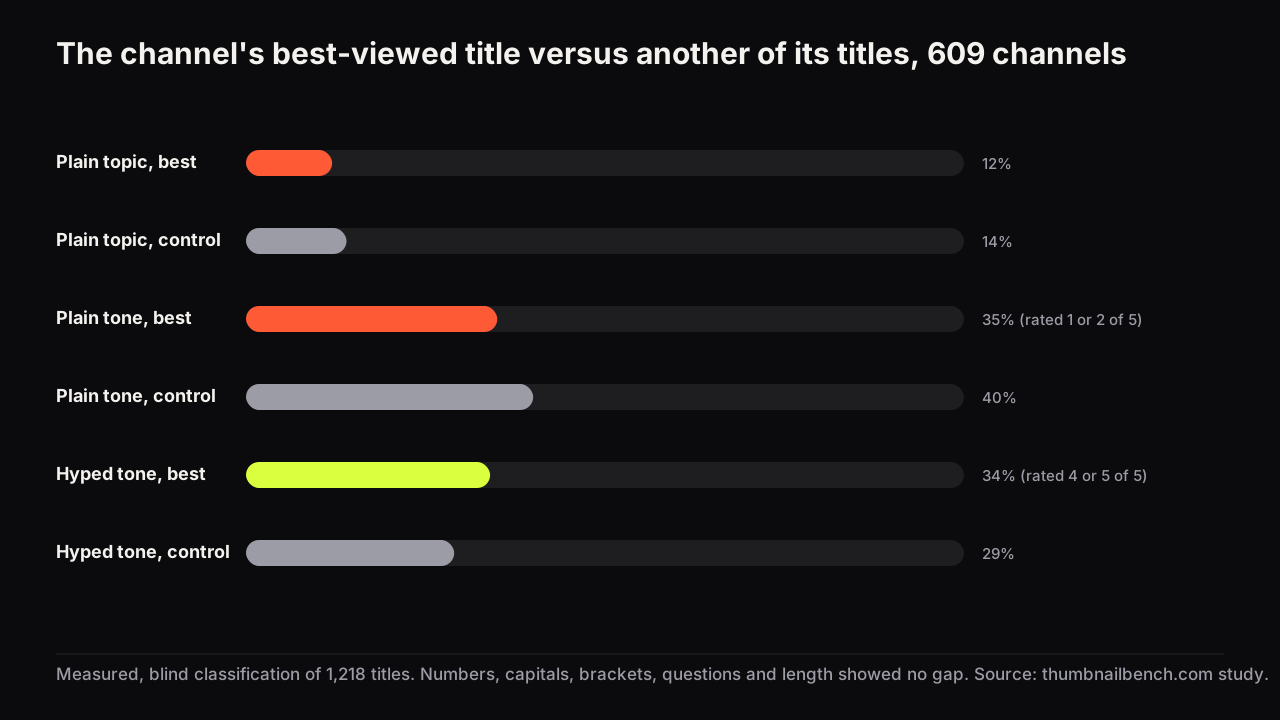
For each of 609 channels in our thumbnail study, we took the video with the most views per day and compared its title with the channel's other titles, first on format (numbers, capitals, brackets, questions, length) and then, with a model reading 1,218 titles blind, on what kind of promise the title makes. The format features showed no gap at all. The promise types showed one: a title that only names the subject is two points less common on the winner, and a title the model rated plain and literal is four points less common. Everything else is within the noise.
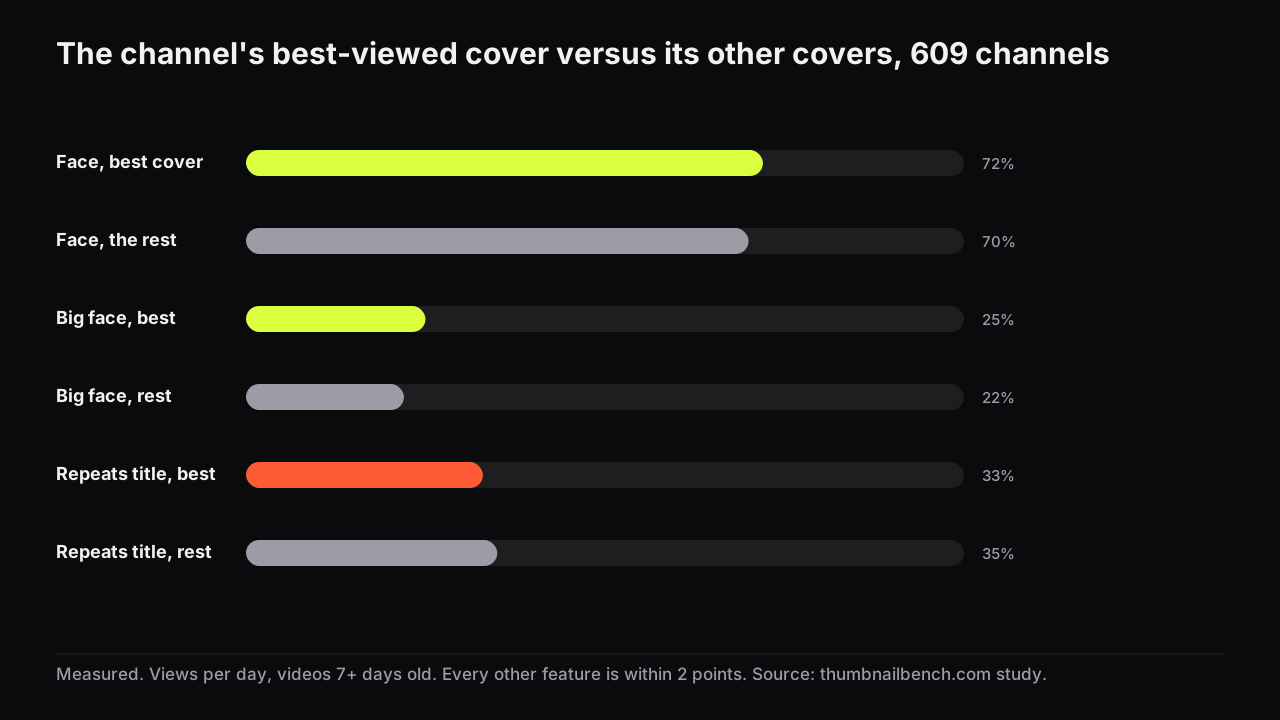
That is the same shape as the cover comparison. The features that guides present as rules are followed by winners and non-winners at nearly the same rate. This page is the title half of that result.
The format features: no gap
We counted 24 format features across all 11,223 titles. The table shows the ones the guides mention most, on the channel's best video against its other videos.
| Feature | On the best title | On the other titles |
|---|---|---|
| Contains a number | 41% | 41% |
| At least one all-caps word | 39% | 39% |
| Brackets or parentheses | 14% | 15% |
| Colon, dash or pipe | 32% | 32% |
| Ends in or opens as a question | 14% | 12% |
| Exclamation mark | 18% | 18% |
| Emoji | 9% | 8% |
| First person (I, my, we) | 12% | 13% |
| Superlative (best, ultimate, every) | 10% | 12% |
| "How to" | 5% | 3% |
| Length | 54 characters, 10 words | 54 characters, 10 words |
Two features have gaps that clear the noise, and both are small: "how to" is on 5 percent of winners against 3 percent, and superlatives are on 10 percent against 12. Length is identical to the character. The winner is not shorter, not punchier, not more capitalised.
The promise types: one loser
Format is not what a title is for, so we asked a model to read each title and say what it promises: a how-to, a story, a review, a list, a reveal, a contrarian claim, a question, a challenge, a news hook, or a plain statement of the topic. It also flagged whether the title names something specific, raises stakes, withholds the outcome, ties to a current event or speaks to the viewer, and rated its tone from 1 (plain and literal) to 5 (hyped or vague on purpose). It saw 1,218 titles, the winner and one random other from each channel, in a shuffled list, without knowing which was which.
| Promise type | On the best title | On the control title | Gap | 95% interval |
|---|---|---|---|---|
| How-to or lesson | 19% | 19% | +0.3 | -2.8 to +3.4 |
| Personal story | 14% | 15% | -0.8 | -4.3 to +2.8 |
| Plain topic (no angle) | 12% | 14% | -2.1 | -6.1 to -0.7 |
| Review or comparison | 12% | 11% | +0.7 | -1.6 to +3.1 |
| Secret or reveal | 10% | 7% | +2.3 | -1.1 to +4.8 |
| News or event | 8% | 7% | +0.7 | -1.5 to +3.3 |
| Challenge or experiment | 7% | 8% | -0.8 | -3.6 to +1.3 |
| Contrarian claim | 6% | 5% | +1.0 | -1.5 to +3.3 |
| List | 5% | 7% | -2.1 | -3.3 to 0 |
| Question | 5% | 5% | +0.5 | -1.1 to +2.5 |
The only promise type whose interval stays on one side of zero is the plain topic: "Chest workout", "Tokyo day 3", "Reviewing the new iPhone". It is on 12 percent of winners and 14 percent of controls. Lists are borderline on the same side. Reveals and contrarian claims lean the other way but do not clear the noise.
The tone rating says the same thing from the other direction. Titles rated 1 or 2, plain and literal, are 35 percent of winners and 40 percent of controls, a gap of four points that clears the noise. Titles rated 4 or 5, hyped or vague on purpose, are 34 percent of winners and 29 percent of controls, a gap of five that just touches zero. The flags for specificity, stakes, withholding and speaking to the viewer showed no gap.
Views per day is a proxy that also reflects the topic, the cover, the upload timing and what the recommendation system did with the video. The comparison shows what is over-represented on a channel's winner; it cannot show that the title caused the win. A two-to-five-point gap is exactly the size a small confound would produce, and we report it as a lean, not a lever.
What we think it means
The winner has an angle. Not a formula, not a number, not a capital letter: a reason the video exists beyond its subject. The flat title, the one that could be the file name, is the one thing in the whole study, covers and titles both, that runs the wrong way on the best video. Our reading is that the angle is where the idea lives, and the idea is what the cover and title comparisons keep failing to find in any countable feature. The title formulas guide is a set of ways to put an angle on a title; the study says which of them you pick matters far less than that you pick one.
It also says something about what the winners are not. Nearly one in five top-channel titles is a how-to, and one in seven is a story. The channel's best video is a how-to or a story at the same rate. The winners' club is not full of hype. It is thin on flat.
What to do with it
- Read your title as a stranger would. If it only names the subject, it is the flat title, and it is the one pattern that ran the wrong way.
- Add the angle, not the decoration. A number, a bracket or a capital word does nothing on its own in this data; a claim, a reveal or a reason does a little.
- Keep the length. 54 characters is the median at the top and the winners are no shorter; the title length guide covers where the cut-off actually bites.
- Give the cover the other half. A third of covers repeat the title's words, and those are two points rarer on winners; the repeat-the-title guide shows the split.
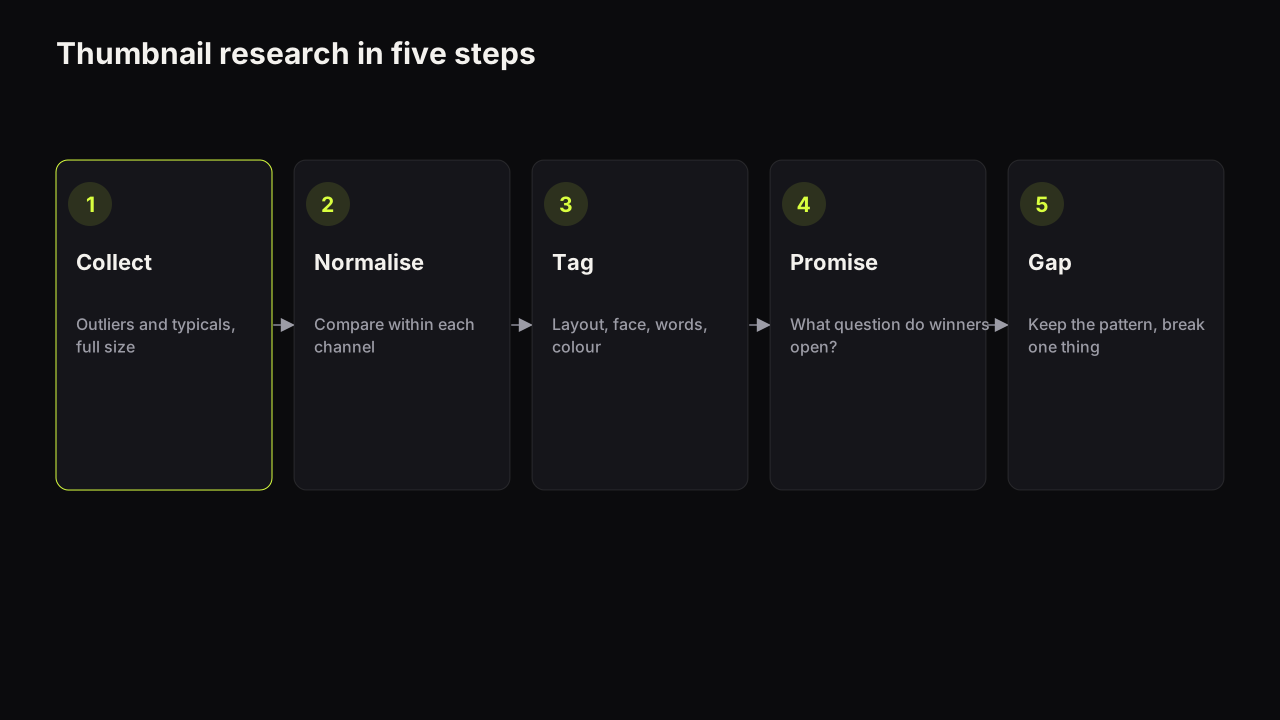
- When you study your own outliers, read for the idea. The competitor research method is a way to do that across a niche, and this result is the reason it counts ideas rather than features.
The titles say what the covers said. Ideas win; features tag along.