On this page
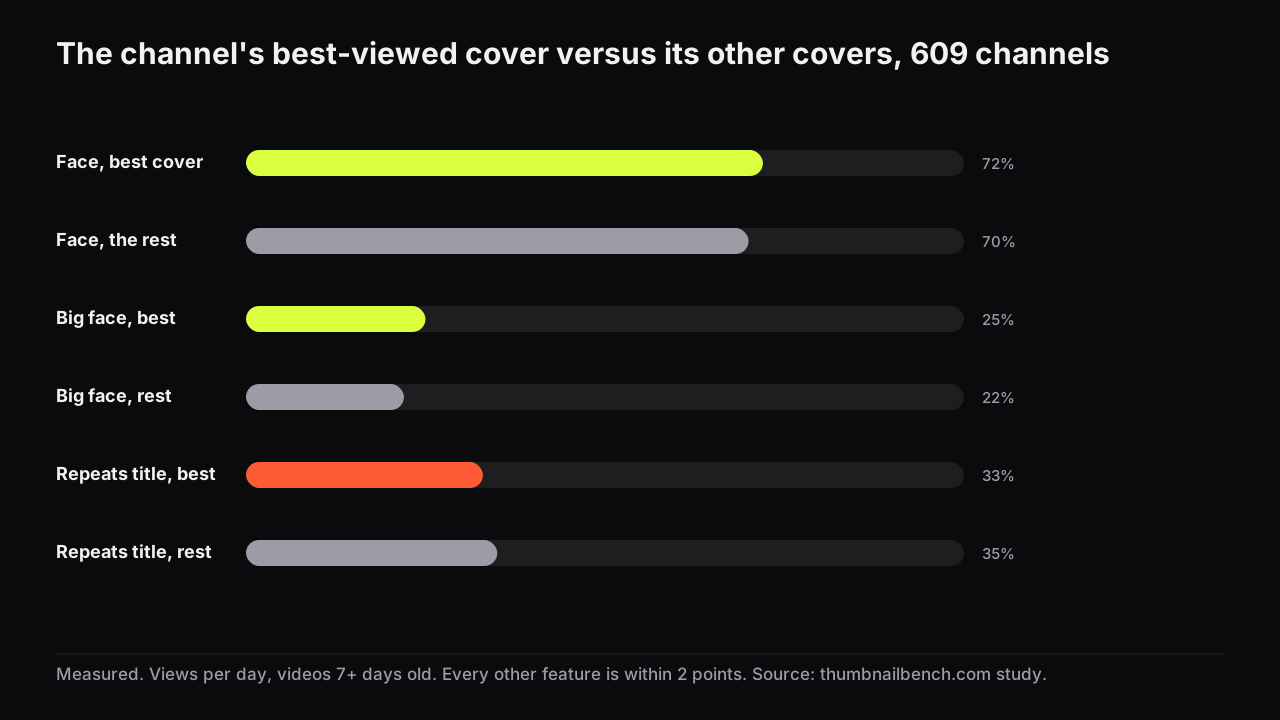
For each of 609 channels in our thumbnail study with at least eight long-form covers older than a week, we took the cover with the most views per day and compared it with the channel's other covers on 24 features. The winner has a face 72 percent of the time; the rest, 70 percent. The winner repeats the video title on the cover 33 percent of the time; the rest, 35 percent. Those are the two largest gaps that clear the noise, and both are two points.
Every other feature the guides tell you to use, the big face, the shocked expression, warm colour, capitals, a number, an arrow, a split screen, is within a few points of even and mostly inside the error. That is the finding, and this page is about what it does and does not mean.
The comparison
| Feature | On the best cover | On the other covers | Gap (points) | 95% interval |
|---|---|---|---|---|
| Big face | 25% | 22% | +2.1 | -0.9 to +5.0 |
| Repeats the title | 33% | 35% | -2.0 | -4.6 to -0.3 |
| Warm accent colour | 57% | 55% | +2.0 | -0.5 to +5.2 |
| Any face | 72% | 70% | +1.9 | +0.7 to +4.1 |
| All-caps text | 46% | 48% | -1.2 | -4.5 to +1.0 |
| Before and after | 6% | 5% | +1.2 | -0.4 to +2.5 |
| Three words or fewer | 31% | 32% | -0.9 | -3.4 to +1.8 |
| A number | 24% | 25% | -0.9 | -3.4 to +2.5 |
| Any text | 76% | 76% | +0.8 | -1.8 to +2.6 |
| Shocked face | 6% | 7% | -0.7 | -2.0 to +0.9 |
| Arrow | 15% | 14% | +0.6 | -1.8 to +3.8 |
| Eye contact | 49% | 49% | +0.4 | -2.7 to +2.8 |
| Split screen | 13% | 13% | -0.4 | -2.4 to +1.8 |
| Object held up | 26% | 27% | -0.4 | -3.4 to +3.5 |
| Screenshot | 13% | 13% | +0.3 | -1.4 to +2.2 |
The interval is the range the gap would fall in 95 times out of 100 if we drew a different set of channels. An interval that crosses zero means the gap could be nothing. Two features have intervals that stay on one side: any face (positive) and repeating the title (negative). Both gaps are two points.
What two points means
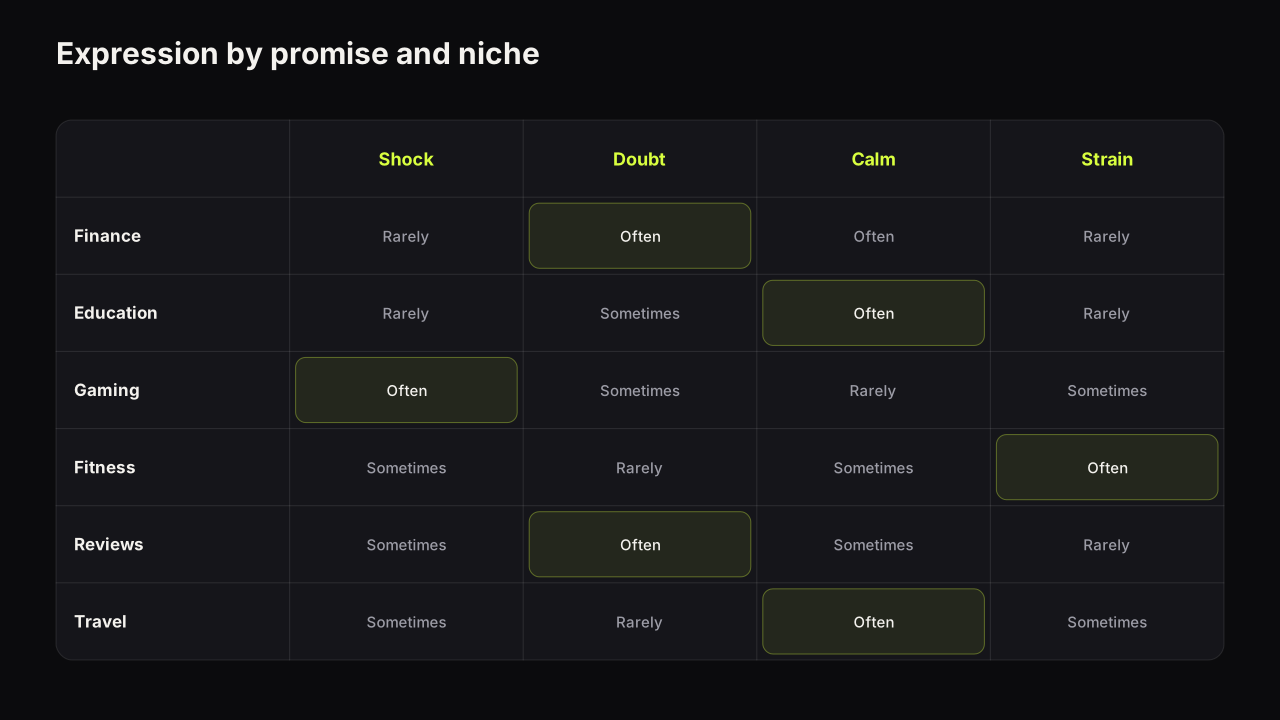
Two points on a base of 70 is not nothing, and across the 609 channels it is consistent enough to survive the resampling. But it is not a lever. If a face were the reason a video won, the gap would be tens of points, the way the niche gaps are (89 percent of Fitness covers have a face; 47 percent of Gaming covers do). The face is the norm at the top, on winners and non-winners alike, and the winner is very slightly more likely to follow the norm.
The title-repeat gap runs the other way and is the same size. Covers whose words are mostly the title's words are two points less common on winners. The title-repeat guide explains why: the second look is wasted when the cover says what the title said.
Views per day is a rough proxy for what the cover did. It reflects the topic, the title, the upload timing, and what the recommendation system chose to do with the video. Click-through rate is the measure that isolates the cover, and it is private to each channel. This comparison can show whether a feature is over-represented on winners. It cannot show that a feature caused the win, and a two-point gap is exactly the size a small confound would produce.
The shocked face, again
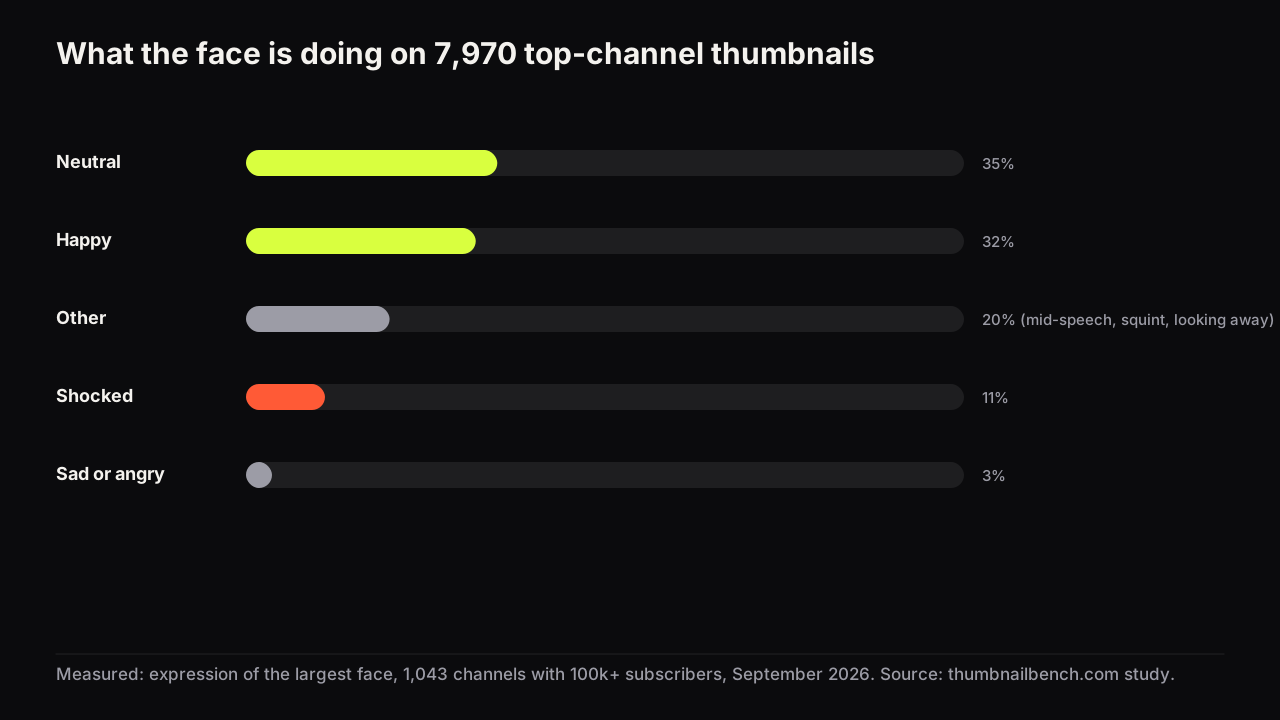
The study page found that among covers with a face, only one in ten is shocked. Here the shocked face is on 6 percent of winners and 7 percent of the rest. It is neither the norm nor an edge. The expressions guide makes the case that the expression is information about the video, and this is consistent with it: the right expression is the one the video earns, and no single expression is over-represented on the covers that won.
What we think it means
Every feature in the table is something a cover can have or not have. None of them is the idea. The cover that outperforms is the one whose promise fits the video and lands in a glance, and that is not a tag a study can count. What the study can show is that the features guides present as rules are mostly niche conventions and channel habits, followed by winners and non-winners at nearly the same rate. Our view is that this is the most useful result in the study: it moves the question from "which features" to "which idea", which is where the work was all along.
That is also why the bench's Review gives you words about the promise and the reading order instead of a score. A score would have to be built from features, and the features do not separate the winners.
What to do instead of counting features
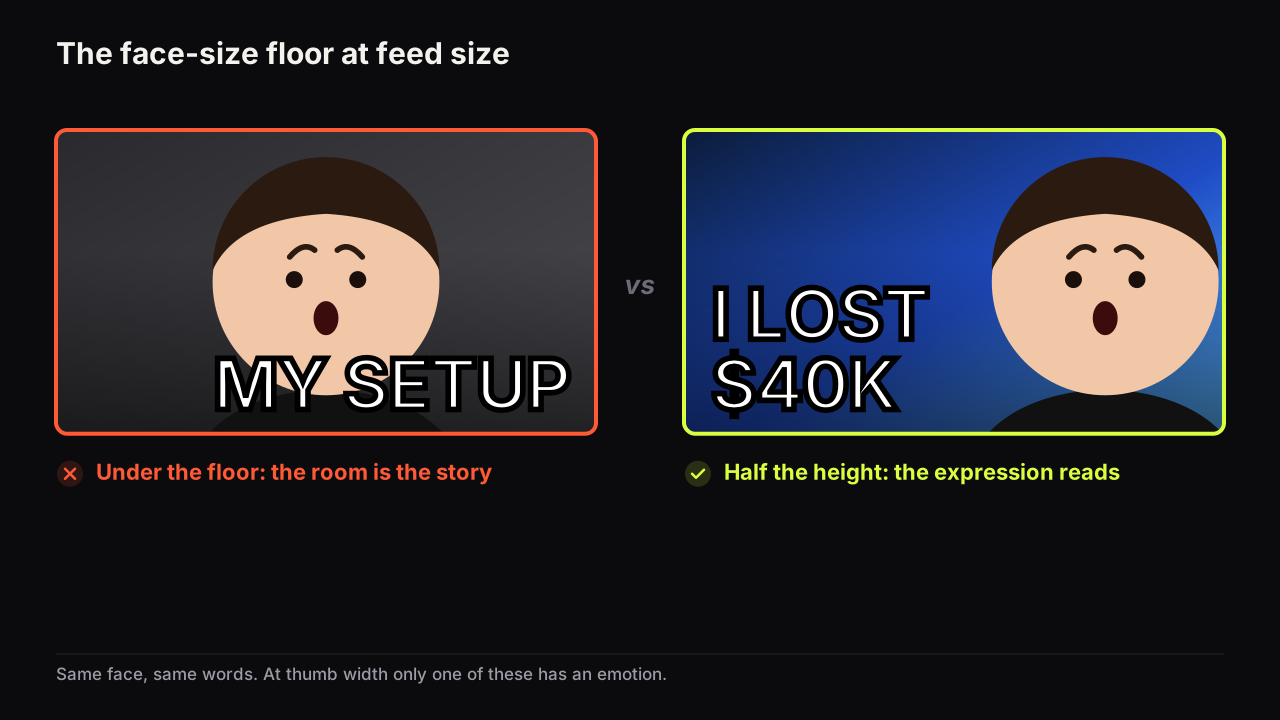
- Put a face on the cover if your niche does; it is the norm on winners and non-winners alike, and the face size guide covers how big.
- Check whether the cover's words repeat the title. That is the one feature that runs the wrong way on winners.
- Study the outliers in your niche with the competitor research method, and read for the idea, not the features.
- Study your own outliers. The outlier guide is about reading the idea behind a channel's best video, not its features, and the within-channel comparison here is the reason that matters.
- When you test, test ideas, not decorations. Two covers that differ by an arrow are unlikely to differ in the feed.
The features are the vocabulary. The winner is the sentence.