On this page
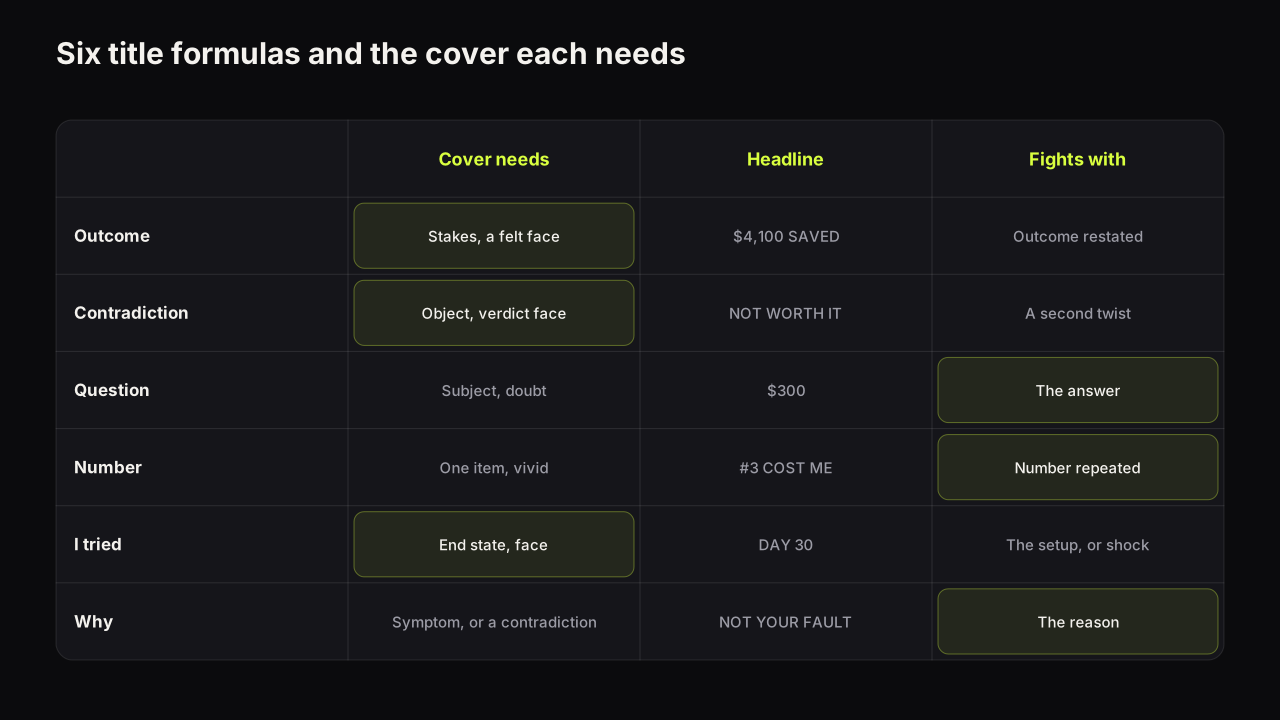
Six formulas cover most of the YouTube titles we see working: the outcome, the contradiction, the question, the number, "I tried", and "why". Each is half a promise, and each needs a particular kind of cover to supply the other half, because the viewer reads the pair as one thing. Each formula also has one cover pattern it fights, and the fights are where most packaging fails: a question title under a cover that answers it, a number title under a cover that repeats the number, an "I tried" title under a shocked face with no outcome in sight. The table below is the short version. The sections after it are the reasons.
The rule that all six share
A title and a cover split one promise: the title says what the video is and the cover says why it matters, or the reverse, and the second look rewards the viewer with something new. That is the division of labour set out in the pillar on titles and thumbnails as one unit, and every pairing below is an application of it. A formula tells you what the title contributes; the cover contributes what is left, which is usually the emotion, the stakes or the specific detail. When the cover contributes the same thing the title already did, the pairing is a repeat. When it contributes a different promise, the pairing is a contradiction. The six formulas differ in what they leave for the cover to do. The formulas are ways to give a title an angle, and the angle is the part that matters: in our comparison of 609 channels' best videos, no format feature separated the winner from the rest, but a title that only named the topic was the one pattern that ran the wrong way.
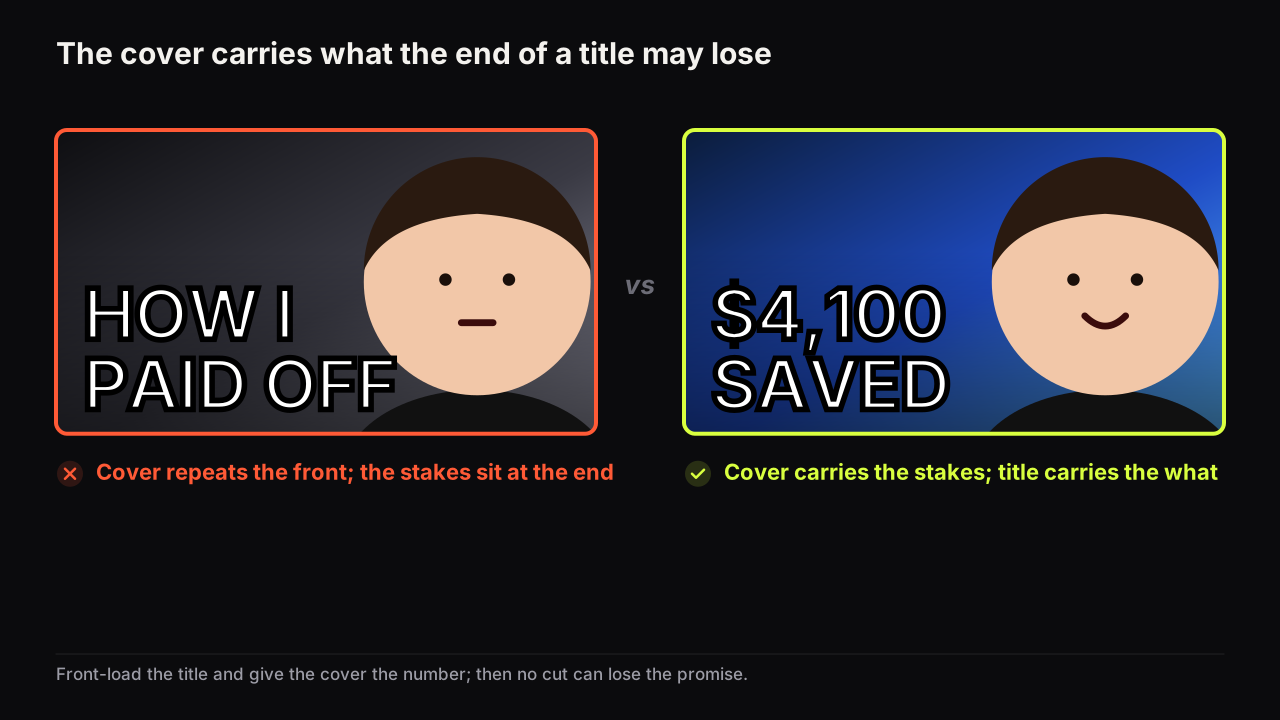
Because the cover is seen first, at every size, and the title may be cut, the part of the promise that cannot be lost goes on the cover or at the front of the title. The three limits on title length explain why front-loading matters more than counting characters.
| Formula | Example title | Cover it needs | Cover it fights |
|---|---|---|---|
| Outcome | I paid off my car loan 2 years early | The stakes as a number, a face that felt it | A cover restating the outcome in words |
| Contradiction | Why I stopped using the tool I recommended | The object, a verdict face, no second twist | A second contradiction on the cover |
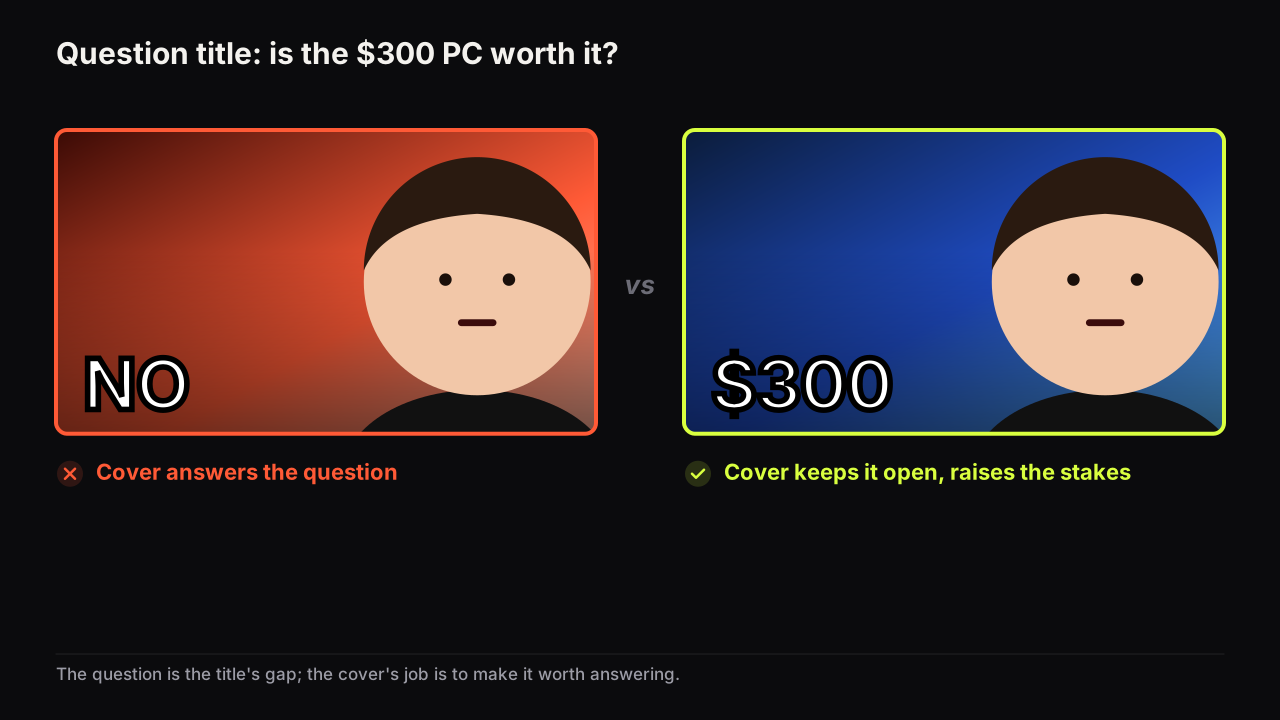
| Question | Is the $300 PC worth it? | The subject and a doubtful face; the question left open | A headline that answers it |
| Number | 7 mistakes new editors make | One mistake made vivid, the specific | The number repeated as the headline |
| I tried | I tried the 5am routine for 30 days | The end state, a face carrying it | A cover of the routine itself, or shock without a state |
| Why | Why your CTR drops after day 3 | The symptom, or a contradiction of the assumed cause | A cover that shows the reason |
Outcome titles
An outcome title states what happened: "I paid off my car loan 2 years early", "We doubled the channel in a year", "The kitchen is finished". The title has spent its front words on the result, so the viewer's question is not what but how much and how. The cover's job is the stakes and the feeling: the figure, set large ($4,100 SAVED), and a face that shows what the figure cost or gave back (doubt, relief, strain). A small object supplies the cause: the car, the kitchen, a chart.
The cover it fights is the one that restates the outcome in words: DEBT FREE under a title that already says the loan is paid. Nothing is added on the second look, and the three words have been spent on the title's job. If the video's payoff is emotional rather than numerical, the cover carries the emotion and the title keeps the fact; if it is numerical, the reverse.
Contradiction titles
A contradiction title puts two things together that should not both be true: "Why I stopped using the tool I recommended", "The cheapest lens is the one I use most", "I gained weight eating less". The gap is already open in the title, and the cover's job is to make it concrete and believable: the object at the centre of the contradiction, large, and a face giving the verdict (doubt, disgust, a wry smile). The headline, if any, names the object or the stake, not the twist.
The cover it fights is a second contradiction. If the title says "the tool I recommended" and the cover says NEVER AGAIN over a different product, the viewer has two questions and forms neither. The guide to opening an information gap without breaking the promise puts it as one gap per package; the contradiction formula uses the gap up in the title, so the cover confirms rather than opens.
Question titles
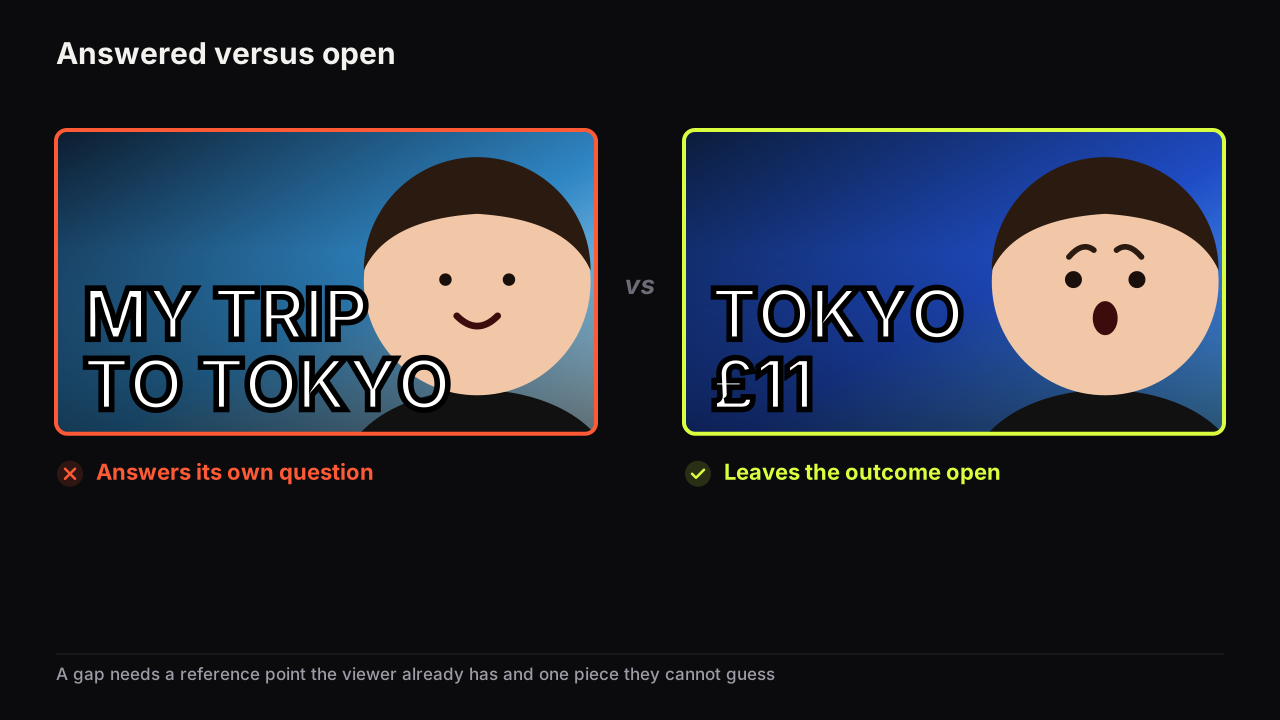
A question title asks what the viewer is already wondering: "Is the $300 PC worth it?", "Can you learn piano in a month?", "Does the fix still work?". It is the formula most often ruined by its own cover, because the natural instinct is to put the answer on the thumbnail. A cover that says NO under "Is it worth it?" has closed the gap before the click; the viewer has what they came for and scrolls on.
The cover a question title needs shows the subject and an expression that is itself undecided: the PC, a doubtful face, the headline $300 or nothing. The question stays open, the stakes get bigger, and the video is the answer. We would rather leave a question cover with no headline at all than put the answer on it, even though a wordless cover loses the search viewer who wants the topic confirmed in text, because the question title already carries the topic and the cover's one job here is to keep the gap open. If the video is a firm verdict and you want the verdict visible, use a contradiction or outcome title instead and let the cover carry the verdict face; the expression-to-promise pairings in which facial expression suits which promise cover which face reads as doubt and which as a decision.
Number titles
A number or list title promises a count: "7 mistakes new editors make", "5 settings to change first", "3 lenses for £200". The number is a specific, and specifics are a lever, but a list is by nature general: seven things is not one picture. The cover's job is to make one of the seven vivid, the most surprising or costly one, and to hint that there are more. A hand hovering over a wrong button, a face wincing, the headline #3 COST ME or STOP THIS. The viewer knows there is a list from the title and now has a reason to want one item of it.
The cover it fights is the number repeated: a giant 7 and the words MISTAKES over a face. It reads as a repeat, and it makes the cover as general as the list. The exception is search-led lists ("5 settings to change first") where the viewer typed the topic and a cover that confirms it is the right choice, a case the guide to whether cover text should repeat the title works through.
"I tried" titles
An "I tried" title promises an experiment and withholds the result: "I tried the 5am routine for 30 days", "I ate like a pro cyclist for a week", "I used only free software for a month". The gap is the missing outcome, and the cover has one job: show the end state without explaining it. A face at day 30 that is tired, or changed, or grinning, with the headline DAY 30 and one object from the experiment. The viewer sees that something happened and cannot see what.
The cover it fights is a picture of the routine itself, an alarm clock at 5:00 with a neutral face, which is a caption of the title and adds nothing; and, at the other extreme, a shocked face with no state behind it, which promises drama the experiment may not contain. The end state is the honest and the stronger option, because the experiment's result is what the video delivers and what the viewer stays for.
Imagine the 5am video with two covers. On the first, an alarm clock reading 5:00 on a bedside table, a neutral face in bed behind it, 5AM ROUTINE in white on a blue-grey ground. The viewer infers a morning-routine video, of which they have seen a hundred, and the title has already said as much. On the second, the same person at a kitchen table in daylight, eyes ringed, holding a mug, DAY 30 in yellow on a warm ground, a wall calendar with days crossed off behind them. The viewer infers that the experiment ended, that it cost something, and cannot tell whether it paid. The second is the one to ship, and the change is not the design. It is which minute of the video the cover was taken from.
"Why" titles
A "why" title promises an explanation: "Why your CTR drops after day 3", "Why the cheap lens looks better", "Why I moved the channel to Tuesdays". The explanation is the payoff, so the cover must not show it. The cover shows the symptom (a falling line, a face looking at a screen), or contradicts the cause the viewer assumes (NOT YOUR FAULT under a title about a CTR drop). Either keeps the why for the video.
The cover it fights is the reason itself. A why title under a cover that reads WRONG FONT has explained the video in two words. Keep the cause out of the picture and give the cover the stake or the symptom.
Caps, emoji and the tone of the pair
YouTube's thumbnail and title tips page advises limiting ALL CAPS and emoji in titles, and says viewers may only see part of the title. Source: YouTube's thumbnail and title tips.
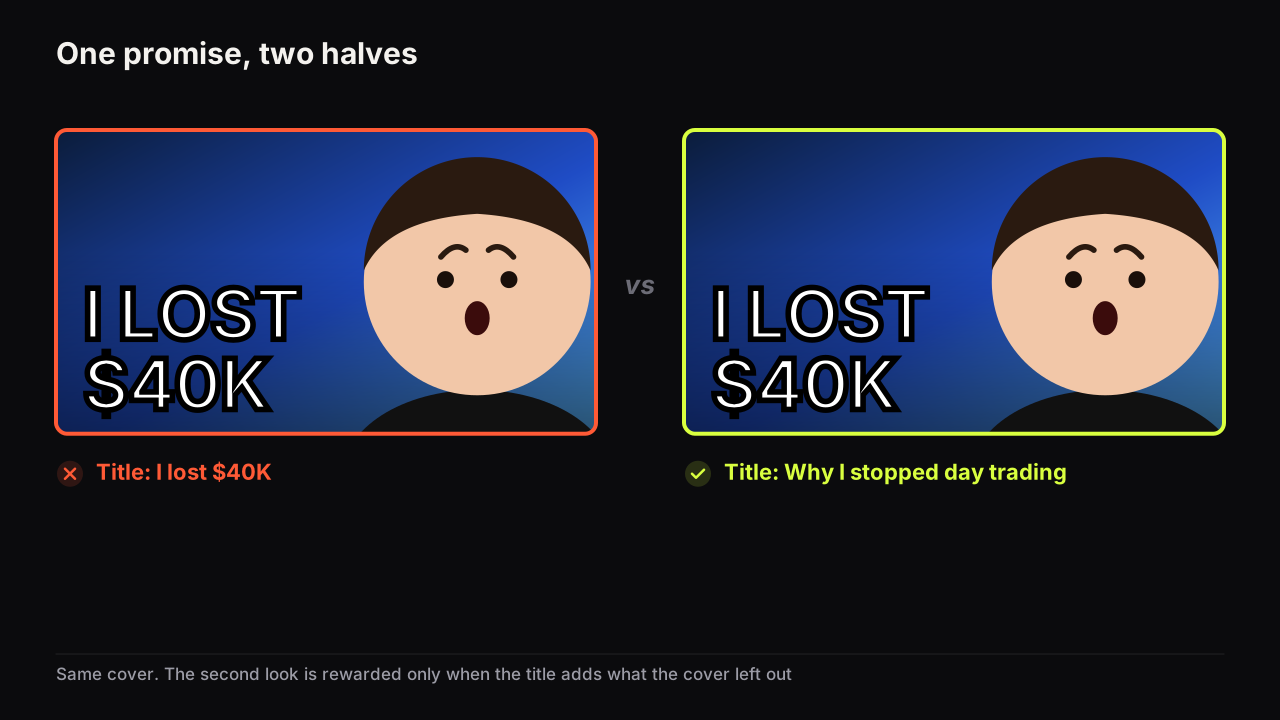
That advice fits the split. The cover already carries the loud half in three big capitals, so a title in sentence case is the pairing that adds something; a title in capitals repeats the cover's tone and spends its front words on volume. The one place a capital word helps is a single stake in an outcome title ("I lost $40K in ONE trade"), and even there the cover can carry it instead. The size limit on the cover side, and why the words are capitals there and not in the title, is the subject of how many words a cover can carry.
Write the formula on the brief before you write the title, and write the cover line beside it: formula, what the cover must supply, what the cover must not show. Most pairing failures are caught by the third item. The one-page packaging brief has a line for each.
Testing the pairing, not the title
Because the viewer experiences the pair, the fair test is of the pair, and YouTube's tool allows it.
YouTube's help page on A/B testing titles and thumbnails says Test & Compare in YouTube Studio can test up to three titles, thumbnails, or title and thumbnail combinations per video, and that the result is decided by watch time share rather than clicks. Source: YouTube's A/B testing help page.
So a test can put an outcome pairing against a question pairing for the same video, and the result tells you which formula this audience answers to for this kind of video, which is a reusable lesson. Vary the formula and its matching cover together; changing the title formula while keeping a cover built for the old one produces a variant that fights itself, and the tool will report on the fight rather than on the formula. The mechanics of designing variants and reading the result states are in the guide to A/B testing thumbnails with Test & Compare.
When we look at pairs that tested badly, the loser is more often a mismatch than a weak title: a question the cover answered, a list the cover repeated, an experiment whose cover showed the setup. Fix the pairing before you look for a better formula.
The cover side of a pairing is the faster half to produce. On the bench the maker renders the cover from a scene description and the three words in the headline field, up to four options per render, which makes it practical to see two formulas' covers side by side before the title is final.
A pairing check before upload
- Name the formula. If the title fits two, it is making two promises.
- Write what the cover must supply for that formula (stakes, subject, end state, symptom) and check the cover does.
- Write what the cover must not show (the answer, the reason, the number, a second twist) and check it does not.
- Read the headline aloud, then the title. The second one adds something.
- Cover the second half of the title with a thumb. The promise survives.
- The title is in sentence case; the capitals are on the cover.
Common questions
Which title formula gets the most clicks?
Nobody has published a sourced comparison and we do not have one, so we will not rank them. In practice the formula matters less than the pairing; a question title with a cover that answers it loses to a plain outcome title with a cover that withholds. Choose the formula that fits the video's payoff, then build the cover the formula needs.
Can I use two formulas in one title?
One formula per title. A question stacked on a number ("7 reasons: is it worth it?") makes two promises, and the cover can only pair with one. If the second formula matters, it is a different video.
Should the title be in ALL CAPS to match the thumbnail?
No. YouTube's tips page asks creators to limit all caps and emoji in titles. The cover already carries the loud version in three big words, so a title in sentence case is the pairing that adds something rather than repeating it.
What to do next
Take the title of your next video and name its formula in the table above. Then write the cover line the formula needs and the one it fights, and look at your draft cover against both. If it is a fight, change the cover, not the formula; the cover is the cheaper half to remake, and the formula was chosen for the video's payoff. When the pairing holds, the title-length guide linked above will tell you whether the front words survive a cut.