On this page
The right facial expression for a thumbnail is the one that matches the promise: shock or surprise for an unexpected outcome, doubt or disgust for a verdict, calm for a lesson, strain for a challenge. A face is looked at before anything is read, so whatever it is doing becomes the first thing the viewer knows about the video. That makes the expression information rather than decoration, and it makes the wrong expression a broken promise before the click. The shocked face is the most copied expression on YouTube and the one most often wrong for the video under it.
Why the face is read first
People look at faces before they look at anything else in a frame. This is a fact about human perception rather than about YouTube, and we state it without a number because every number we have seen attached to it in thumbnail advice is unsourced. What it means for a cover is that the face is a magnet, and a magnet is only useful if what it pulls the eye to is worth reading.
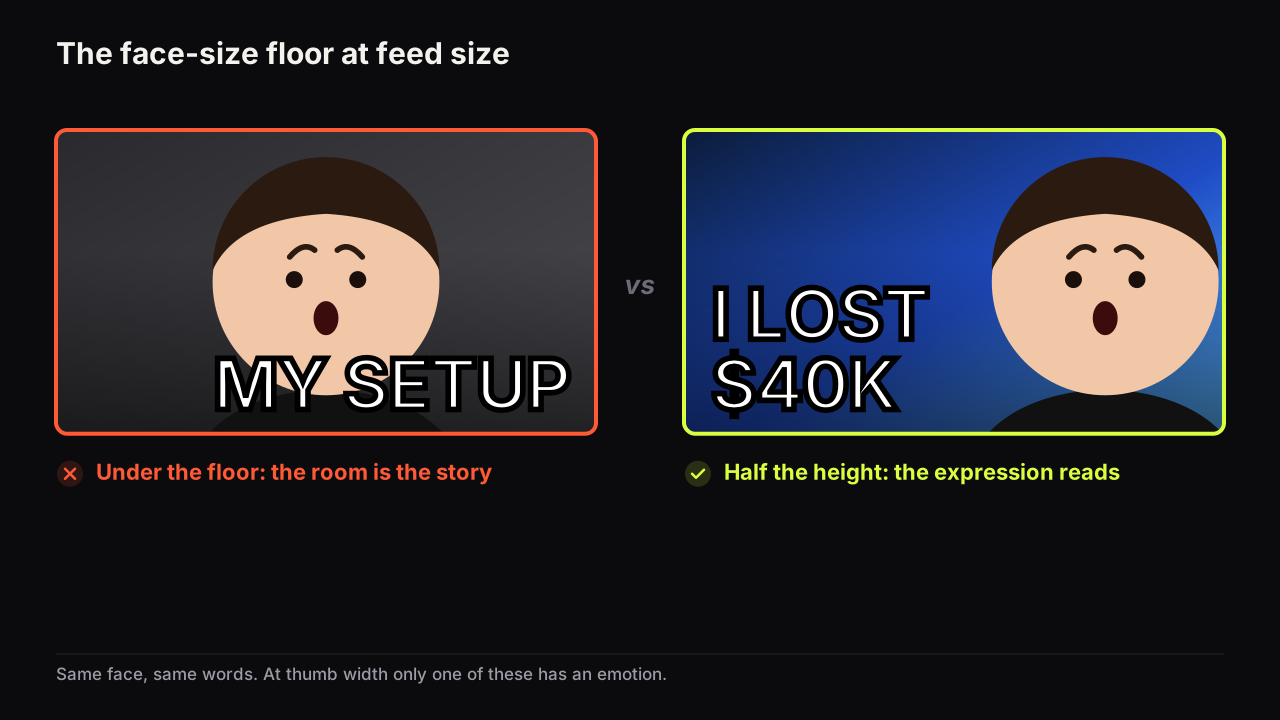
Two conditions follow. The face has to be large enough for its expression to read at feed size, which is the subject of the guide to how big the face needs to be on a thumbnail; below that floor a viewer sees "a person" and nothing else. And the expression has to be one thing. A face doing two things at thumb size does nothing.
Name the emotion in one word. If you need a phrase ("sort of amused but worried"), the expression will not survive the shrink. Shock, doubt, joy, disgust, calm, strain, sadness: one of those, held clearly, is what reads at the size viewers see.
Expression is information, not decoration
An expression tells the viewer how to feel about the thing before they have read a word. A shocked face beside a car says "something surprising happened to this car". A doubtful face beside the same car says "I am not sure this car is worth it". A calm face beside it says "I am going to explain this car". Same object, three different promises, and the viewer has formed the promise before reading the headline.
The most common expression mistake we see is an emotion with no cause. A shocked face on its own, no object in frame and nothing in the headline to be shocked about, is a mask. The viewer asks "shocked at what?" and gets no answer, which is a gap with no reference point; the guide to how an information gap actually forms explains why that does not work as curiosity.
Every expression needs a visible cause. Put the thing the face is reacting to in the frame (the object, the number, the screen) or in the headline. The test is to cover the face with your thumb: does the rest of the cover explain why someone might look like that? If not, add the cause or change the expression to one that needs no cause, such as calm.
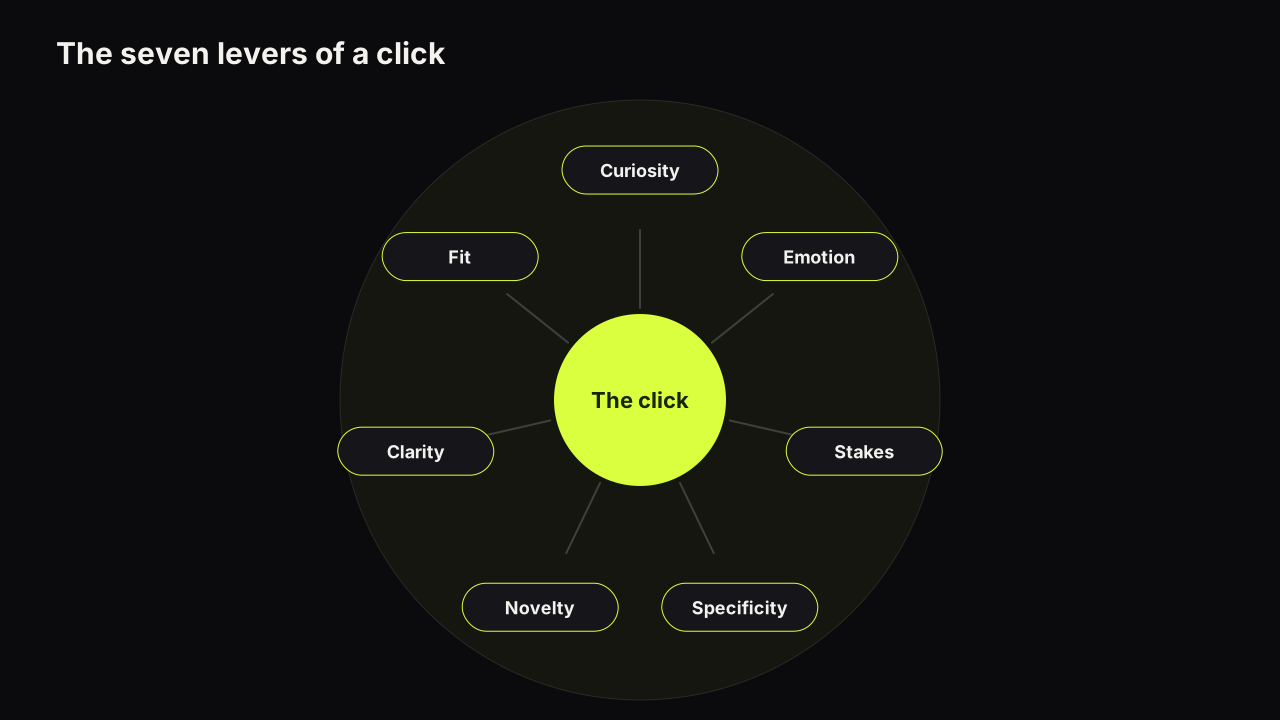
The face and the cause together form an eye path. The pillar on the seven levers behind a click treats emotion as one lever among seven, and in practice it is rarely pulled alone: the expression sets the tone, and the object or headline supplies the stakes or the specific that the tone is about.
Matching the expression to the promise
The promise decides the expression, not the other way round. Work out what the video delivers, then choose the face that a viewer would expect from someone who had just experienced that delivery.
| The video promises | Expression that fits | Why it fits |
|---|---|---|
| An unexpected outcome | Shock, surprise | The viewer borrows the reaction before knowing the cause |
| A verdict on something | Doubt, disgust, delight | The face is the verdict; the object is the subject |
| A lesson or a method | Calm, focus | Calm says "this is manageable", which is the promise |
| A challenge or endurance | Strain, exhaustion, triumph | The face carries the cost of the attempt |
| A confession or a story | Serious, sad | A big expression on a personal story reads as performance |
| A comparison or a versus | Curious, sceptical | The viewer is invited to judge alongside you |
| A warning | Angry, stern | Anger implies someone is at fault, which raises the stakes |
Take an illustrative debt video. The cover is the creator open-mouthed, banknotes falling around them, "I PAID OFF £30K" in gold on red. The viewer infers a windfall, and the finance audience most likely to click reads it as hype. The promise is endurance, so the face should carry cost: tired, a small relieved smile, looking down at a final statement on the desk that supplies the cause. Keep the number and lose the falling money. The same headline now reads as "this took years, here is how".
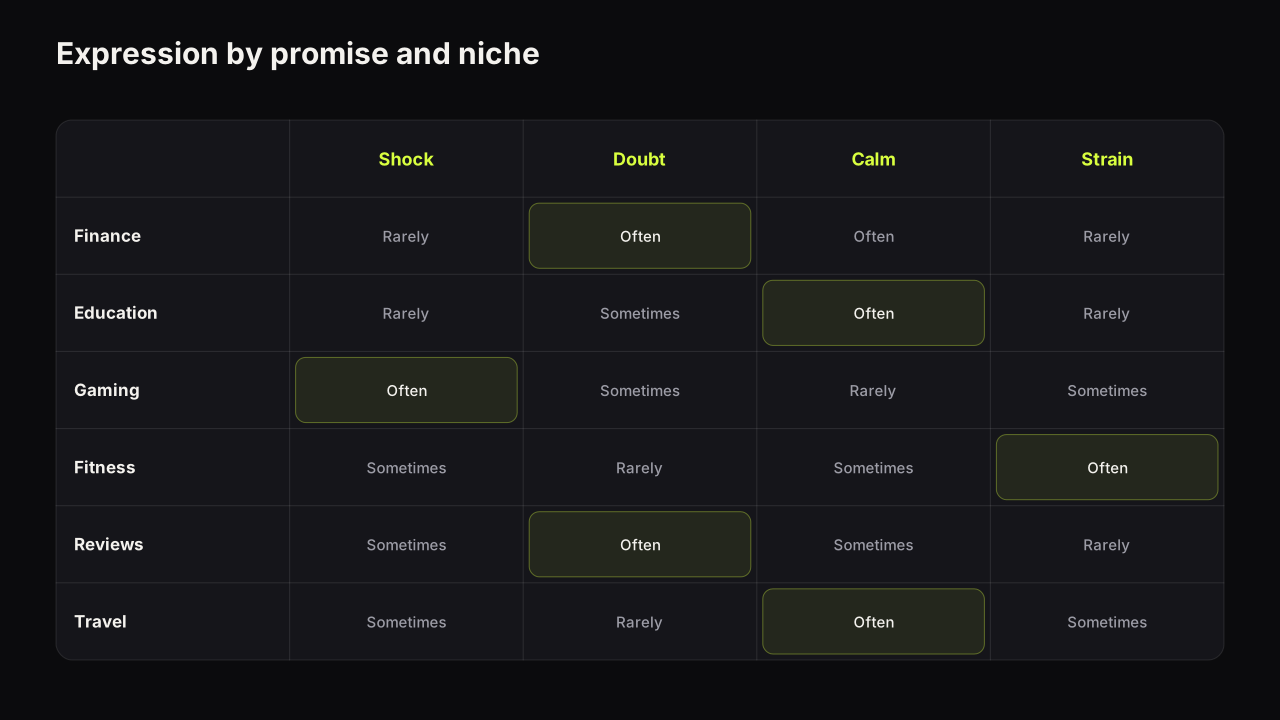
The same promise reads differently by niche, because each audience has its own conventions about what a trustworthy face looks like.
Finance and business audiences trust doubt and quiet confidence over shock; a shocked face on a money video reads as hype to the people most likely to click it. Education and tutorial audiences respond to calm and to a face that looks like it knows; the shocked face underperforms in tone there because it promises drama the lesson will not deliver. Gaming accepts the full range and uses shock and scream freely. Fitness favours strain and triumph, with the body as the object. Travel favours awe, and the face is often smaller against the place. Reviews and tech run on verdict expressions, with the product large and the face doing the judging. These are patterns we see across channels we look at, not measured results.
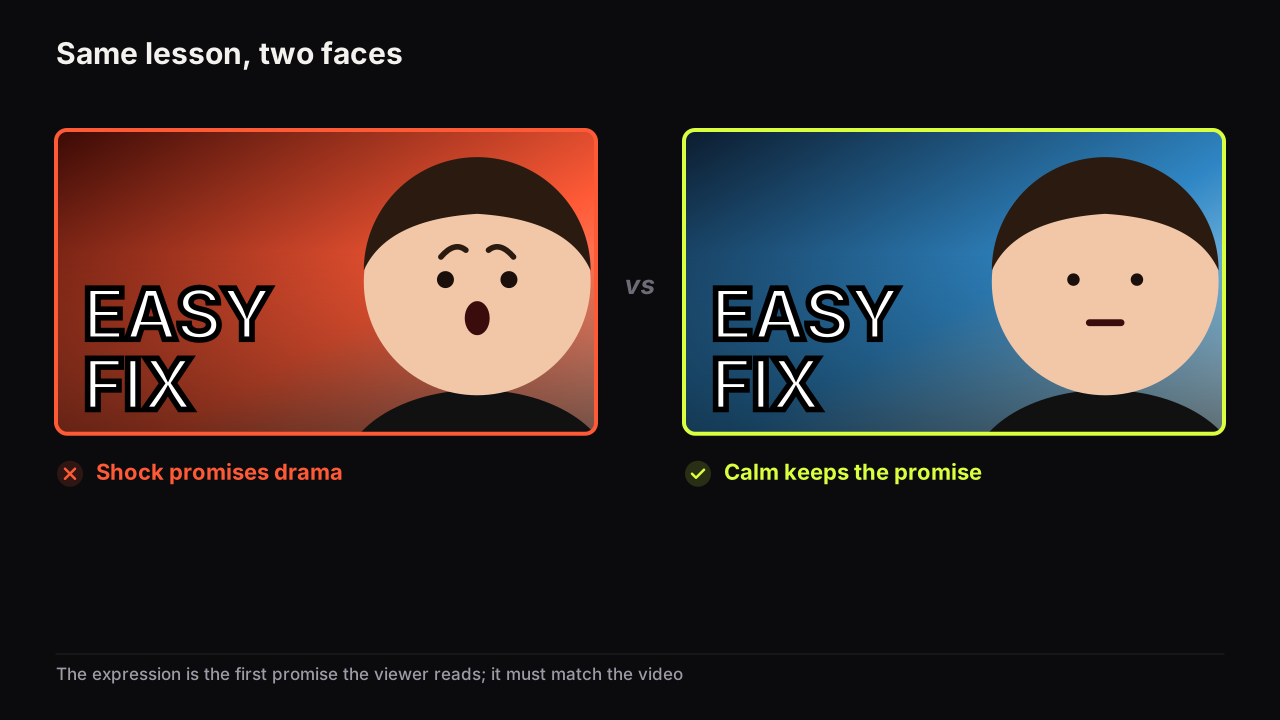
When the shocked face stops working
The shocked face is the most copied expression on YouTube because it works in the situation it was made for: an unexpected outcome, a cause in frame, an audience that expects energy. It stops working in three ways, and each has a different fix.
Mismatch. The video is a lesson, a review or a story and the face is shocked anyway. The cover promises drama, the video delivers calm, and the viewer who clicked for drama leaves. Fix: choose the expression from the promise table above.
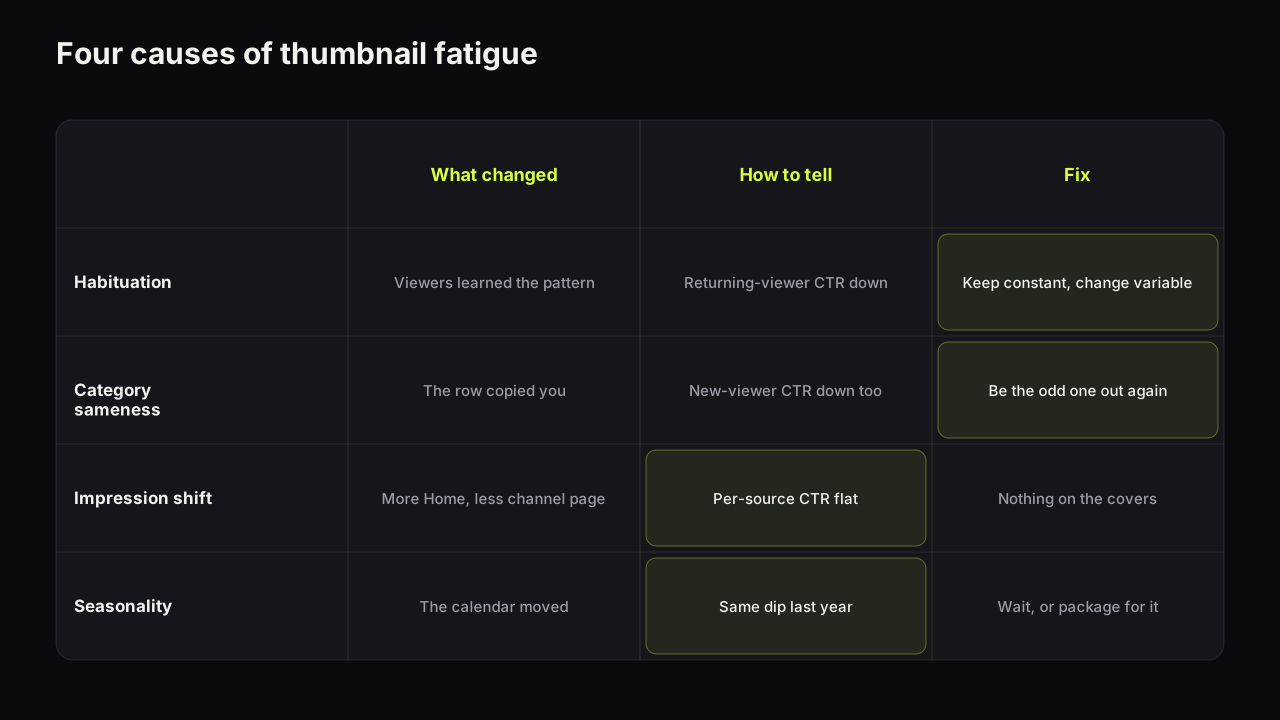
Habituation. Your own audience has seen your shocked face on forty covers. It no longer reads as "something happened"; it reads as "the usual". The expression has become a channel logo. Fix: rotate expressions deliberately, and keep a note of which expression went with which video so you can see the pattern in your own feed. We would rotate on purpose even though it costs some of the instant recognition that one signature face builds. A face the audience recognises but no longer reads is a logo.
Category sameness. Everyone in the niche is using it. In a row of six shocked faces, shock is the neighbour's colour, and the calm face is the odd one out. Fix: look at the row you actually appear in and pick the expression that is missing from it. The piece on telling thumbnail fatigue from a change in distribution separates habituation from the other reasons a style stops working, because the fixes differ.
At thumb size, the difference between a felt expression and a performed one is mostly in the eyes and eyebrows. A wide-open mouth with relaxed eyes reads as a pose; raised brows and widened eyes with a closed mouth still read as surprise. When creators tell us "my shocked face looks fake", it is usually the mouth doing the work and the eyes doing nothing.
Where the eyes should look
Eye direction is a layout decision as much as an expression decision, because the viewer's gaze follows the face's gaze.
- At the viewer. Creates contact. Suits confessions, verdicts, warnings and any cover where the face is the subject. The viewer's eye lands on the face and stays.
- At the object. Directs attention. Suits reviews, reveals, comparisons and any cover where the object is the subject. The viewer's eye lands on the face, follows the gaze to the object, and reads the headline last.
- Off-frame at nothing. Loses both. The viewer follows the gaze out of the cover and onto the next one in the row.
Put the face on one side and let its gaze close the eye path. In left-to-right languages we recommend headline left, face right, with the face looking at the viewer or across the cover at the object. If you find yourself adding an arrow or a circle to tell the viewer where to look, the gaze is usually pointing the wrong way.
Eight expressions from one photo
Shooting eight expressions on the day, lit to match every future cover, is the part of thumbnail production most creators skip, which is why so many channels have one usable expression. On the bench, Face Lab takes one selfie (head and shoulders, facing the camera), cuts it out automatically, and renders eight expressions from it: Shocked, Surprised, Happy, Excited, Angry, Curious, Scream and Sad, one credit each. Any saved face can then be placed into any render, and the model paints it into the scene's lighting and angle. You can also change the expression on a finished cover, which returns two options for two credits.
This makes expression the cleanest single variable to change between two candidates. The same scene, headline and object with a doubtful face and a shocked face is a fair test of which expression this audience trusts, which is how we suggest using it in the guide to testing one variable at a time with Test & Compare.
Face Lab works only with faces of people who agreed to be on your thumbnails: you, a co-host, a client who has said yes. No public figures without consent and no minors, as set out in the acceptable use policy.
Common questions
Do I need a face on the thumbnail at all?
No. A face is the easiest way to carry emotion, but object-led niches such as reviews and tech, and faceless channels, replace it with a large object, hands, a result, or stronger colour contrast. The expression's job, telling the viewer how to feel about the thing, then has to be done by the object and the headline. The full thumbnail guide covers the faceless substitutes in its section on the parts of a cover.
Should I look at the camera or at the object?
Either works; off-frame at nothing does not. Eyes on the viewer create contact and suit confessions, verdicts and direct address. Eyes on the object direct the viewer's attention to it and suit reviews, reveals and comparisons. Choose based on which of the two you want the viewer to look at second.
Can I use a guest's or a client's face?
Only with their agreement to appear on your thumbnails. That is the rule for any face on the bench, and it is the right rule off it: no public figures without consent, no minors. If you produce covers for a podcast or a client, get the yes in writing before the first render.
What to do next
Write down the promise of your next video in one sentence, pick the expression from the table, and check it against the niche pattern. Then look at your last ten covers in a row: if the same expression appears on most of them, the next cover should use a different one on purpose, and the note you keep about which expression went where becomes your first fatigue log. If the face is not reading at all, the problem is size before expression, and the face-size guide linked above is the next read.
For the niche where calm beats every other expression, read why educational and tutorial covers work differently.