On this page
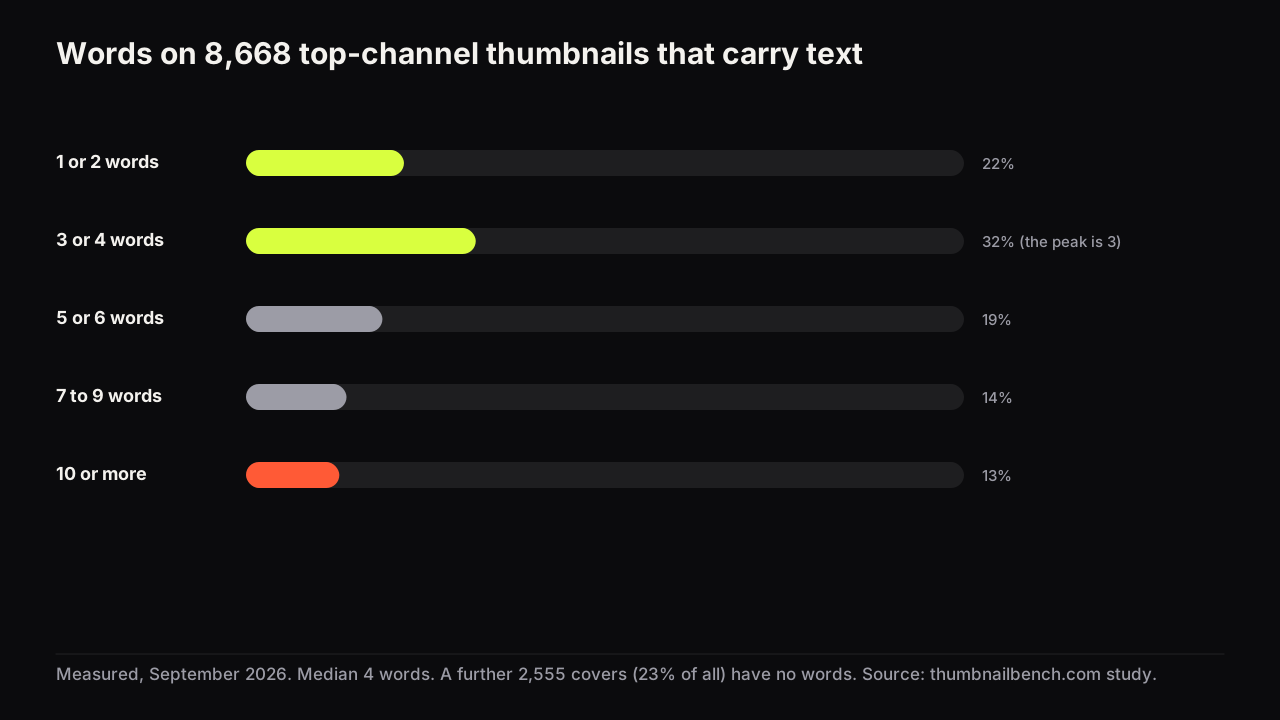
Among the 8,668 thumbnails in our study of 1,043 top channels that carry any designed text, the median count is 4 words. Four in ten have three or fewer. A quarter have seven or more, and one in eight has ten or more. Add the 2,555 covers with no words at all, and the picture is not "three words": it is a wide spread with a peak at three or four and a long tail of covers that treat the thumbnail as a second title.
That spread is the useful part. The how-many-words guide explains why short wins at phone size. This page is what the winners actually do, and where each part of the distribution comes from.
The distribution
| Words on the cover | Share of covers with text |
|---|---|
| 1 or 2 | 22% |
| 3 | 18% |
| 4 | 15% |
| 5 or 6 | 19% |
| 7 to 9 | 14% |
| 10 or more | 13% |
The peak is three. The median is four because the tail is long. The mean is 5.8, which is why "average words on a thumbnail" is a misleading number to quote: it is dragged up by the 13 percent of covers carrying ten or more words, most of them a headline plus a label plus a caption, or a full sentence set small.
Where there is text, 62 percent of covers set it entirely in capitals and 73 percent give it an outline, a shadow or a box. White is the text colour on 68 percent, black on 11, yellow on 9, red on 3.
A quarter of covers have no words
23 percent of the 11,223 covers have no designed text. The share is not spread evenly.
| Niche | No words | Median words (with text) | 3 or fewer | 7 or more |
|---|---|---|---|---|
| Food | 51% | 4 | 47% | 22% |
| Gaming | 33% | 3 | 54% | 16% |
| Travel | 31% | 4 | 47% | 15% |
| Reviews | 25% | 4 | 42% | 24% |
| Vlog | 24% | 5 | 32% | 41% |
| Tech | 18% | 4 | 41% | 26% |
| Fitness | 17% | 4 | 33% | 24% |
| Commentary | 17% | 4 | 42% | 23% |
| Education | 16% | 6 | 28% | 41% |
| Business | 14% | 5 | 37% | 33% |
| Finance | 6% | 4 | 40% | 29% |
Food, Gaming and Travel go text-free on a third to a half of covers, because the dish, the game or the place is the promise and a label would only repeat it. Finance almost never does: 94 percent of Finance covers carry text, usually a number and a claim.
The text-free covers in Food and Travel are not minimal by accident. Scroll a Food channel and the covers with words are the ones where the picture cannot carry the idea on its own: a technique, a comparison, a mistake. The plated dish gets no words because it needs none. The niche has worked out, cover by cover, when text adds something.
Who writes the long ones
Education and Vlog are the two niches where four in ten text-carrying covers run to seven words or more. They do it for different reasons.
Education covers often carry a question or a claim in full ("Why does this bridge not fall down?") because the cover is doing the work of a lesson title, and the channel's audience reads. Vlog covers carry a caption ("Our first week in the new house") because the face is the hook and the words are context, set small.
Both are choices the niche has settled on, and both are the kind of cover that reads fine on a desktop and badly in a phone feed, which is where the mobile guide starts. If you are in one of those niches and your covers are at seven words, you are in the majority; whether the majority is right is a question the title-repeat article helps you answer cover by cover.
Bigger channels use text less, not shorter
| Subscribers | No words | Median words (with text) | 3 or fewer | 7 or more |
|---|---|---|---|---|
| 100k to 500k | 19% | 4 | 37% | 31% |
| 500k to 2M | 23% | 4 | 42% | 25% |
| 2M+ | 32% | 4 | 45% | 21% |
The median does not move. What moves is the share of covers with any text at all, 19 to 32 percent text-free, and the share with a long caption, 31 down to 21 percent. Big channels are not writing tighter headlines; they are leaving more covers to the picture and the title. The big-channel article has the rest of that pattern.
What to do with the numbers
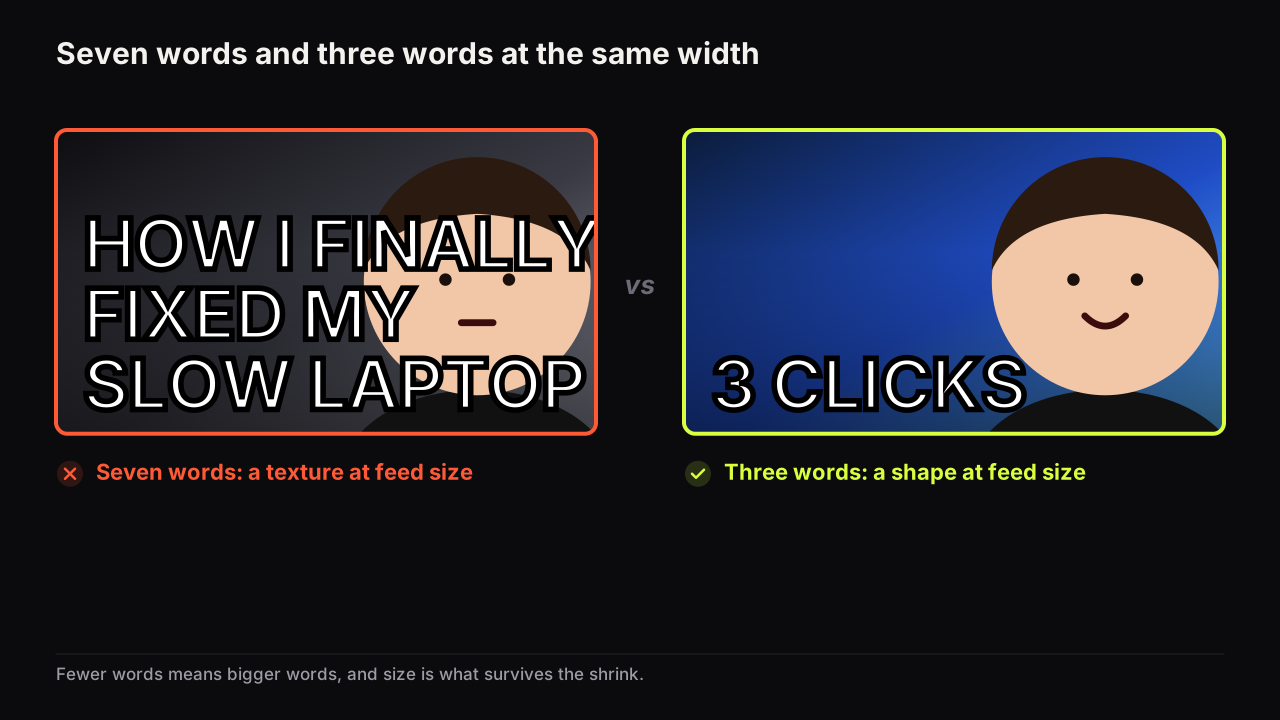
Three words is still the right default for a cover that has to be read in a phone feed, and the study does not change that; it shows that the top channels get there on four in ten covers and leave a quarter of covers with no words at all. The practical rule is to decide first whether the cover needs words, then how few.
- Ask whether the picture already says it. In Food, Gaming and Travel the answer is often yes, and the top channels leave the cover clean.
- If it needs words, aim for three and accept four. That puts you where the peak of the distribution is.
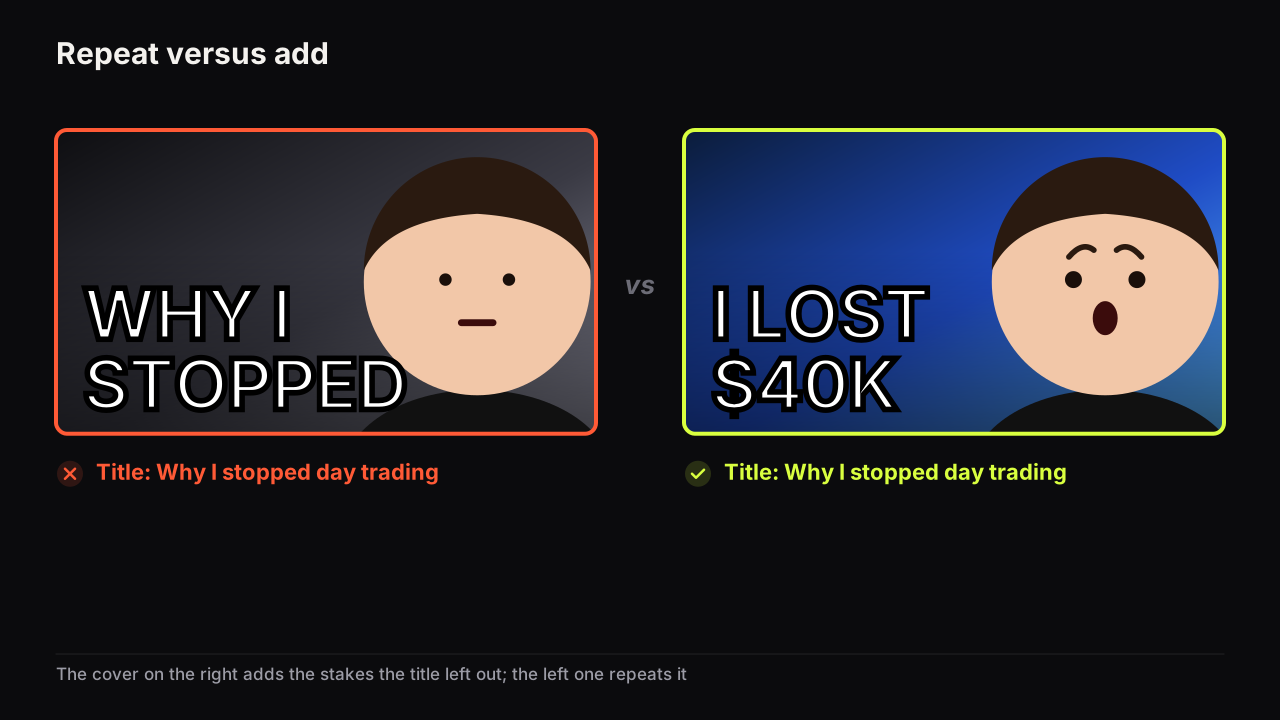
- If you are at seven or more, you are writing a title, and the video already has one. Cut to the half of the promise the title does not carry.
- Set it in capitals with an outline if you want to match the majority; 62 and 73 percent of text covers do. That is convention, not evidence that it clicks better.
- Count your last fifteen covers. If the median is above five, the words are doing the title's job. Counting your niche's covers the same way is the competitor research method.
The next article to read is the how-many-words guide, which turns the count into the two-tier headline that survives feed size.