On this page
A YouTube thumbnail can be removed, and a channel can receive a strike, for two kinds of mistake: an image that breaks Community Guidelines, and packaging that promises content the video does not contain. YouTube's thumbnails policy covers the first and points to its spam, deceptive practices and scams policy for the second. Almost every case we see among ordinary creators is the second kind. Taste has nothing to do with it, and neither does how "clickbaity" the cover looks. The rule has a clear test: does the video contain what the cover shows?
What the two policies actually say
YouTube's thumbnails policy says thumbnails that violate Community Guidelines are removed, that violations can earn a strike, and that sexually explicit thumbnails can lead to termination. For titles, thumbnails and descriptions that promise content the video does not contain, it points to the spam, deceptive practices and scams policy.
That is the whole documented picture as of September 2026, and this article stays inside it. We do not describe enforcement outcomes beyond what those two pages say, and we do not give legal advice.
Two things follow from the wording. The first is that a thumbnail is judged as content in its own right: an image that would be removed as a video frame is removed as a cover, and the fact that it is "only a thumbnail" is no defence. The second is that misleading packaging is a policy matter. Creators argue about whether a shocked face or a red arrow is in good taste. The policy does not care about taste. It asks whether the video contains what the cover promises.
Misleading packaging is a rule, not a style
The test the policy implies is simple to state: does the video contain what the thumbnail shows or says? Whether the video lives up to the hype is a different question. So is whether the thumbnail is exaggerated. The policy asks only whether the thing the cover presents exists in the video.
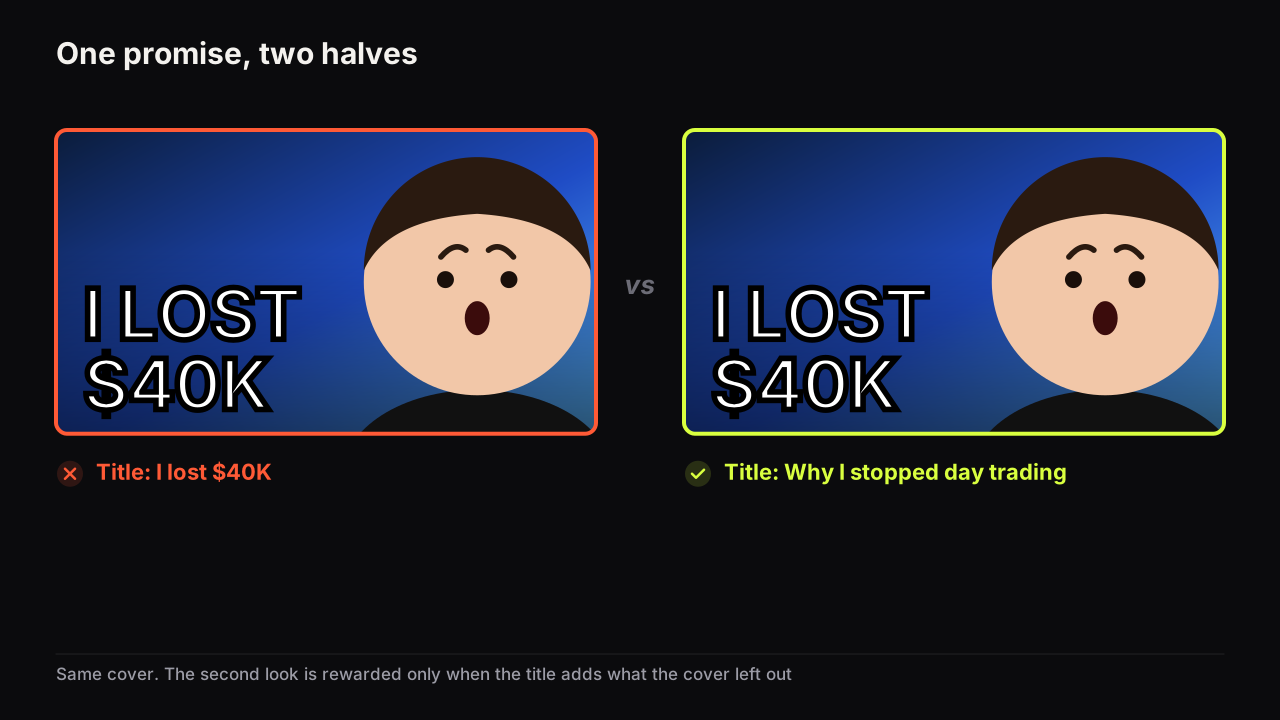
A cover that says "I LOST $40K" on a video in which the creator explains how they lost $40K is fine, however dramatic the face. A cover that says "I LOST $40K" on a video about budgeting tips, in which no money is lost, promises content the video does not contain. The gap between them is not a matter of degree. One is a question the video answers; the other is a claim the video does not make.
This is also why the policy question and the performance question point the same way.
YouTube's help page on A/B testing titles and thumbnails says a test's result is decided by watch time share, not clicks.
A cover that earns a click the video cannot keep loses that viewer early, and their short watch time counts against it. A false promise loses the test before it ever reaches a policy review. Why the tool can pick the thumbnail with fewer clicks is the full account; the short version is that YouTube's own testing tool and YouTube's own policy both reward the cover whose promise the video keeps.
The line between a curiosity gap and a false promise
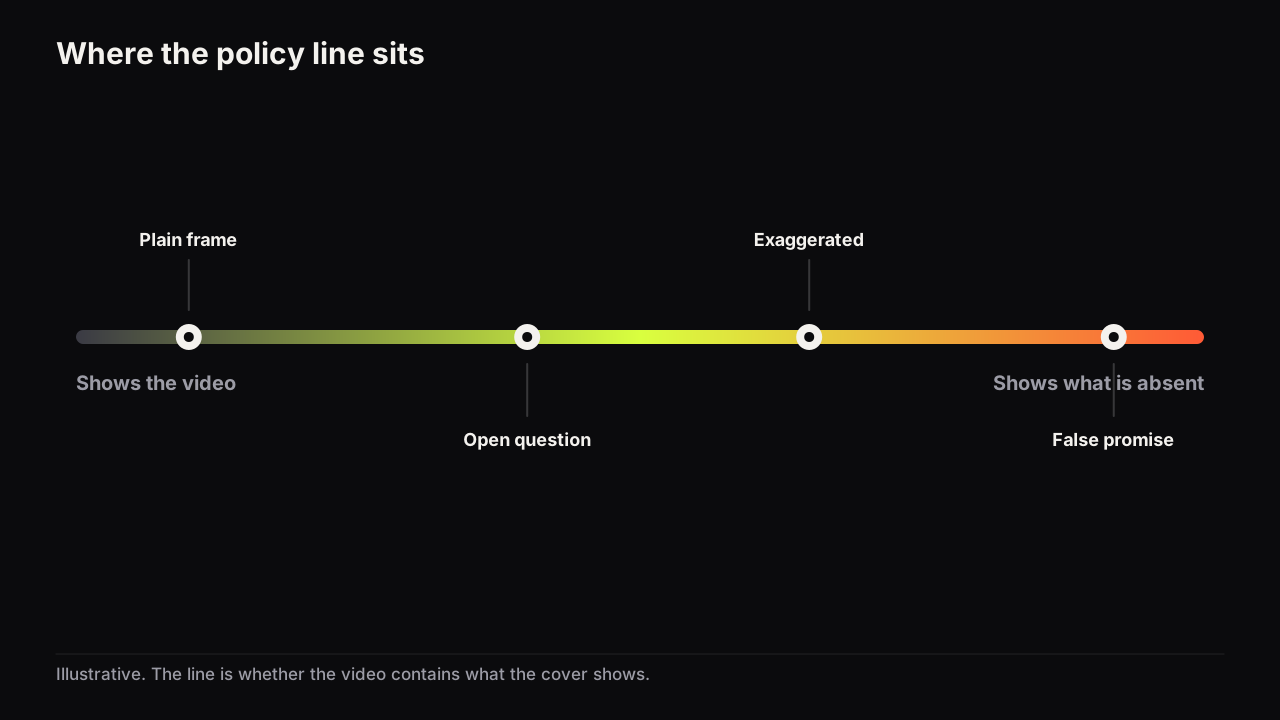
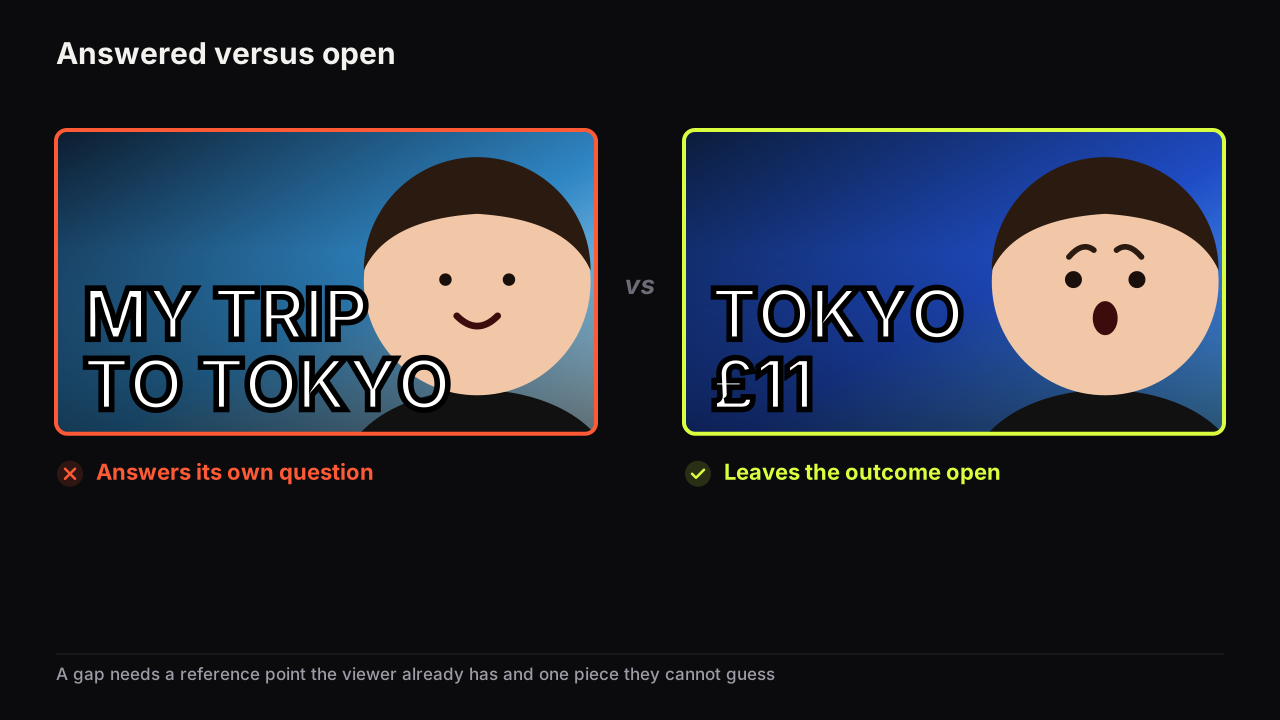
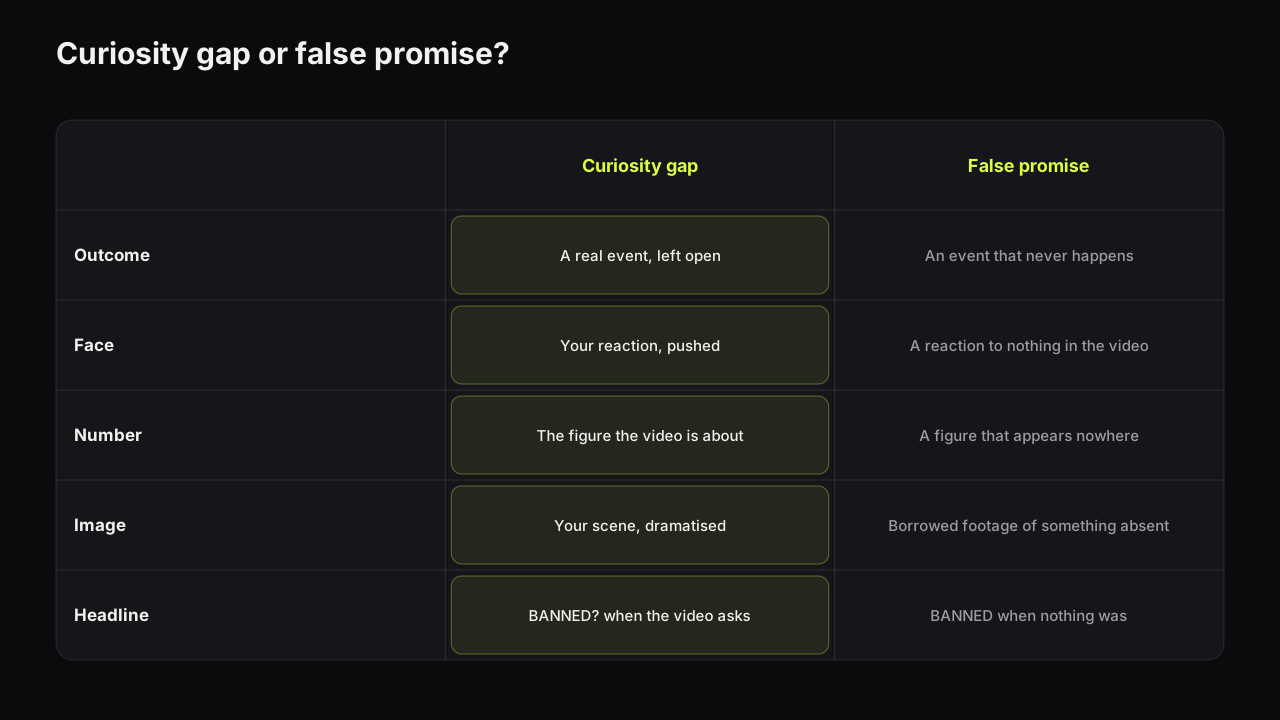
A curiosity gap is a question the cover raises and the video answers. A false promise is a claim the cover makes and the video does not deliver. The mechanics of opening a question without clickbait are a design subject; the boundary is what matters here.
| Element | Curiosity gap (allowed) | False promise (deceptive) |
|---|---|---|
| Outcome | "WHAT HAPPENED" over a real event in the video | An outcome shown on the cover that never occurs |
| Face | Your real reaction, pushed for the camera | A reaction to something that is not in the video |
| Number | "$40K" when the video is about that $40K | "$40K" when no such figure appears |
| Image | A prop or scene from the video, dramatised | A borrowed or rendered image of something absent |
| Headline | "BANNED?" when the video asks whether it will be | "BANNED" when nothing was banned |
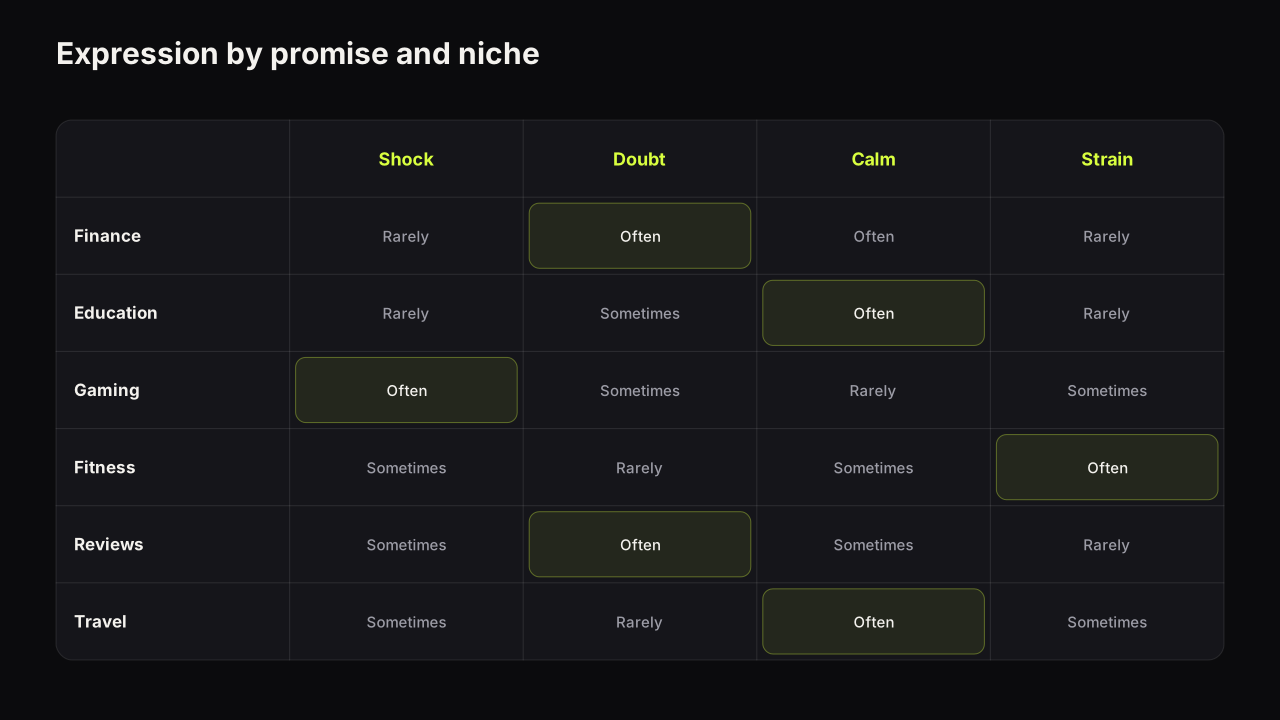
Exaggeration sits in the middle and it is where most creators worry unnecessarily. A face that is more shocked than you were, a number set in fire, a background more dramatic than your bedroom: none of these promise content the video lacks. They amplify the delivery of a promise the video keeps. The policy line is crossed when the amplified thing is not in the video at all.
We recommend one test before every upload: write down the sentence a stranger would form from cover and title together, then find the timestamp in the video where that sentence becomes true. No timestamp means the promise is false; fix the cover or fix the edit. A timestamp near the end means the promise is late, which is a retention problem rather than a policy one, but it is worth moving earlier. This is the same promise check that sits in the pre-upload checklist, and it is the only policy tool most channels need.
The mistakes that cross the line
Each of these is something we have seen a reasonable creator do without meaning to deceive anyone.
The outcome that does not happen. A "we broke up", a "it exploded", a "I got fired" on a video in which none of that occurs. Usually it starts as a joke or a metaphor and reads as a claim. The fix is a headline that asks the question the video answers ("DID WE?") or names the thing that did happen.
The event from somewhere else. A news photo, a still from another creator's video, a stock image of a crash, used on a video that discusses the event but does not contain it. The cover implies footage the video lacks. Use a frame or prop from your own video, or a clearly drawn or rendered representation that does not pose as footage.
The person who is not in the video. A famous face on a reaction or commentary video in which that person never appears. This is a false promise under the deceptive practices policy, and it is a likeness question on top, which is the subject of the next section.
The number that appears nowhere. "$1,000,000", "10X", "99%" chosen for shape rather than truth. If the number is in the video, it can be on the cover. If it is not, it is a promise the video does not keep. The number should do the talking in finance covers precisely because a true number is the strongest honest hook there is.
The verdict the video never reaches. "SCAM", "DEAD", "BANNED", "OVER" as a headline on a video that weighs the question and does not conclude. Add a question mark or use the word the video uses. We would put the question mark on every verdict headline where the video weighs rather than concludes, even though the mark costs some of the punch, because "SCAM?" still carries the stake and "SCAM" on an undecided video is the exact claim the policy names.
The rendered scene presented as real. AI tools make it easy to produce a photographic image of an event, a place or a person. A rendered scene that dramatises what the video contains is craft; a rendered scene that shows something the video does not contain, presented as if it happened, is the same false promise as the borrowed news photo. The brief for an AI cover should describe what the video actually delivers, which is one reason a good render prompt starts from the video's promise.
The Community Guidelines image. Sexual, violent, hateful or otherwise guideline-breaking imagery on a cover, whatever the video contains. The policy is explicit that this is removed and that sexually explicit thumbnails can lead to termination. It is the one category where the question is only "what does the image show", never "what does the video contain".
Someone else's cover, copied. Copying a real creator's thumbnail wholesale is not a thumbnails-policy matter as such, but it is a rights problem, and it is your responsibility. Study the layout, never the cover: the difference between learning a pattern and reproducing an image is the subject of competitor research done properly.
Several of these tend to arrive together. Imagine a commentary video about a streamer whose channel was suspended for a day. The draft cover: the streamer's face lifted from their own stream, mouth open, "BANNED" in red block capitals, a padlock over the platform's logo, black ground. Three problems on one image. The streamer is not in your video and did not agree to be on it. "BANNED" is a verdict the video does not reach, since the suspension lifted. And the lifted frame poses as footage you do not have. The version we would ship: your own face, one eyebrow up, looking at a phone screen blurred to a shape, "24 HOURS?" in the same red on the same black. The viewer infers a question about a short suspension, which is what the video delivers, and the cover has lost nothing but the risk.
Other people's faces: a consent question before it is a policy question
A face is the strongest element a cover has, which is why creators reach for faces that are not their own. Two separate problems are hiding there.
The first is the false promise already described: a person on the cover who is not in the video. The second applies even when the person is in the video, or is discussed in it. Using someone's likeness on a thumbnail is a question of their consent and of the rights that attach to the image, and neither is YouTube's to grant. It is your responsibility to have the yes.
We recommend a simple rule that we also apply to the bench: a face goes on a cover only if that person agreed to be on your thumbnails. You, a co-host, a guest who said yes, a client who briefed you. No public figures without their consent, no minors, nothing sexual or hateful. For podcasts and clip channels, get the agreement in writing before the first cover. The acceptable use policy sets this out for renders; the reasoning holds off the bench too.
This is also why Face Lab is built the way it is. You upload one selfie of yourself, or of a person who agreed, and it produces the eight expressions (Shocked, Surprised, Happy, Excited, Angry, Curious, Scream, Sad) that a cover needs, to drop into any scene. The expression can be pushed as far as the promise needs, because how far to push an expression is a design decision; whose face it is, is not.
If a thumbnail is removed
Read the notice in YouTube Studio first. It names the policy that applied, which tells you which of the two kinds of mistake you made: the image itself, or the promise. The two policy pages linked above are the source for what happens next, and as of September 2026 they say that thumbnails violating Community Guidelines are removed, that violations can earn a strike, and that sexually explicit thumbnails can lead to termination. We do not add to that.
What we recommend on your side:
- Replace the cover with one that shows what the video contains. A frame from the video with a short honest headline is enough to get the video presentable again; you can improve it later.
- Do not re-upload the same image or a close variant. The notice was about the image or the promise, not about the file.
- Review the channel for the same mistake. A creator who made a false-promise cover once has usually made several. Check the videos still receiving impressions first.
- Fix the packaging habit, not the one cover. If the cause was a promise the video did not keep, the fix is upstream: decide the title and thumbnail as one promise before filming, so the video is built to deliver what the cover will say.
- The video contains the outcome, event or object the cover shows
- Every number on the cover appears in the video
- Every person on the cover appears in the video and agreed to be on it
- Verdict words match what the video concludes, or carry a question mark
- Any borrowed or rendered image dramatises the video, and does not pose as footage of something absent
- Nothing on the image would be removed as a video frame under Community Guidelines
Common questions
Is clickbait against YouTube's rules?
The word does not appear in the policy, but the thing people mean by it can. YouTube's thumbnails policy points to the spam, deceptive practices and scams policy for titles, thumbnails and descriptions that promise content the video does not contain. A cover that opens a question the video answers is not that; a cover that shows an event that never happens in the video is.
Can I use a celebrity's face in my thumbnail?
Not without their agreement, in our view, and never as if they appear in a video they do not appear in. The second case is misleading packaging under the deceptive practices policy. The first is a likeness question that is your responsibility; the rule on the bench is that only faces of people who agreed to be on your thumbnails can be used.
What happens if YouTube removes my thumbnail?
YouTube's thumbnails policy says thumbnails that violate Community Guidelines are removed, that violations can earn a strike, and that sexually explicit thumbnails can lead to termination. The notice in YouTube Studio names the policy. Replace the cover with one that shows what the video contains, and review the rest of the channel for the same mistake.
What to do next
Run the timestamp test on the cover for your next upload, and on the five videos on your channel that still receive the most impressions. Any cover without a timestamp gets replaced this week. Then make the promise check part of your process rather than a rescue: the full guide to how covers earn the click puts the honest promise at the centre of every design rule, because a click the video cannot keep was never worth earning.