On this page
- Why a small sample fools you
- Rule one: fewer tests, each one bolder
- Rule two: test the pattern across uploads, not the picture on one video
- Rule three: use Test & Compare wherever it runs
- Reading results without fooling yourself
- Borrow evidence you did not have to generate
- Keep a lessons log
- What to do next
A small channel can test thumbnails; it cannot test them the way a large channel does. With few impressions, the answer is to run fewer tests, make the two covers differ in one large way rather than a small one, and test a packaging idea across several uploads instead of two pictures on one video. YouTube's own tool follows the same logic: its help page says a test resolves faster with more different variants and more impressions, and the first of those is entirely in your hands.
Why a small sample fools you
A click-through rate built from a handful of clicks moves a long way when a couple of viewers change their minds. Suppose a cover draws two hundred impressions and ten clicks; that is a rate of 5%. Two more clicks and it is 6%, a fifth higher, on the strength of two people. Those are illustrative figures, not a threshold, but the shape holds at any small size: the smaller the click count, the more of the difference between two covers is chance. One thing worth testing is the quiet cover: big channels use half the arrows and screenshots of channels under 500k, and the only way to know whether your audience is ready for that is to compare.
YouTube's impressions and click-through rate FAQ says half of all channels and videos have a rate between 2% and 10%, and that new videos or channels (less than a week old, for example) or videos with fewer than 100 views can see a wider range. It also says a video that gets a lot of impressions, for example on the Home page, will naturally have a lower rate than one whose impressions come mostly from the channel page.
Three more things make a small channel's numbers harder to read than a large one's, and none of them is a design problem.
- The audience changes hour by hour. A new upload's first viewers are mostly subscribers arriving from notifications; later ones arrive from Home and Suggested. A manual swap after twelve hours compares two audiences, not two covers, and a small channel's whole first-day sample can be a few dozen subscribers.
- Striking results shrink. When the sample is small, the most surprising result is the one most likely to be noise, because noise is what produces surprises in small samples. A cover that "doubled CTR" on a few hundred impressions will usually look ordinary once the impressions grow. The surprise was a property of the sample size, not the cover.
- Nothing averages out. A large channel's weekday effects, topic effects and weather all wash out across many uploads. A small channel's do not. A Friday upload on a popular topic against a Tuesday upload on a niche one will show a gap that has nothing to do with either cover.
We do not publish an impression count below which a test is meaningless. There is no documented number, and any figure would depend on how different the covers are and how noisy the channel's daily traffic is. The three rules below are built so you do not need one.
Rule one: fewer tests, each one bolder
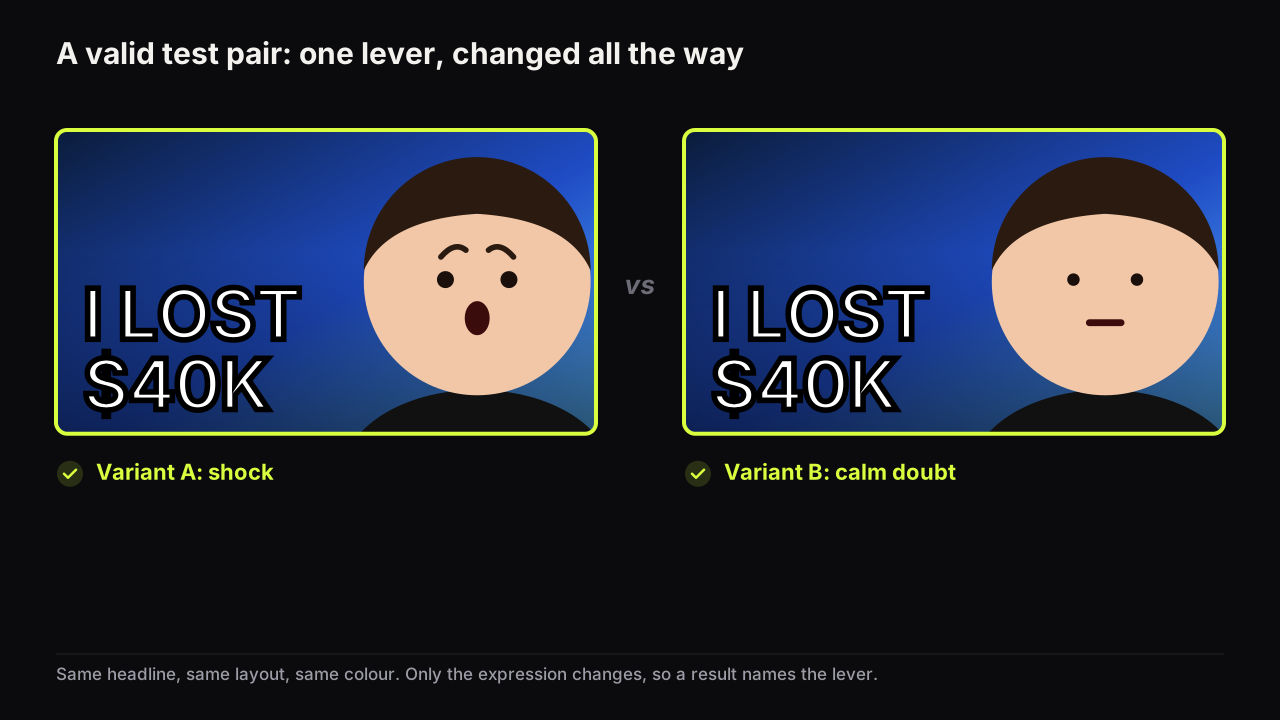
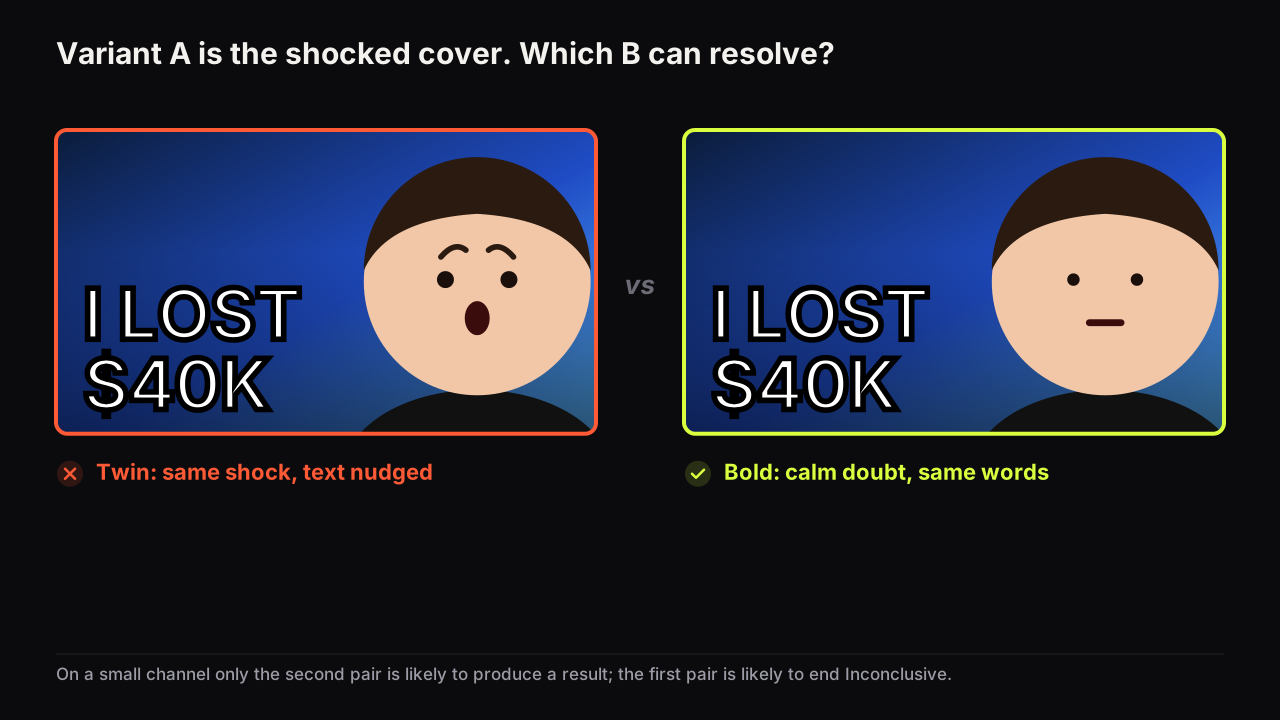
The way to get an answer from a small sample is to make the difference between the two covers large enough that chance cannot produce it. Two versions of the same cover with the text nudged and the face slightly bigger are twins; viewers treat them the same, and no amount of waiting separates them. Two covers that make the same promise through different levers behave differently fast.
| Lever | Twin (will not resolve) | Bold difference (can resolve) |
|---|---|---|
| Expression | Shock with wider eyes | Shock versus calm doubt |
| Headline | "I LOST $40K" versus "LOST $40K" | A number versus no headline at all |
| Layout | Face moved slightly left | Face-led versus object-led |
| Colour | Two shades of blue | Dark cover versus light cover |
| Idea | The same scene reshot | Outcome cover versus contradiction cover |
Say your tutorial channel's usual cover is your face mid-shock beside a laptop, "IT BROKE" in yellow on black. The twin is the same photo with the eyes a little wider and the words in orange; a viewer at thumb width sees the same cover twice. The bold second variant keeps the laptop and the words and changes the person: calm, one eyebrow up, looking at the laptop rather than the camera, on a pale grey ground instead of black. Now the viewer sees a different mood and a different brightness, and whichever way the result falls it tells you whether this audience wants alarm or composure from a tutorial.
Bold does not mean two things at once. Change one lever, all the way, so a result names the lever. The seven reasons people click is the list to choose that lever from, and the A/B testing guide covers the full design and reading method for both the tool and the swap. A small channel just applies its rules more strictly.
Run one test at a time, and pick the lever you would most like a house rule for. On a channel with modest impressions, a test that answers "does this audience prefer calm or shock across all my covers" is worth ten that answer "which of these two pictures is nicer".
Rule two: test the pattern across uploads, not the picture on one video
A single video cannot give a small channel enough impressions to separate two covers; a run of videos can. The method is to alternate one packaging idea across several uploads of the same format and compare each upload with the channel's own baseline rather than with the upload before it.
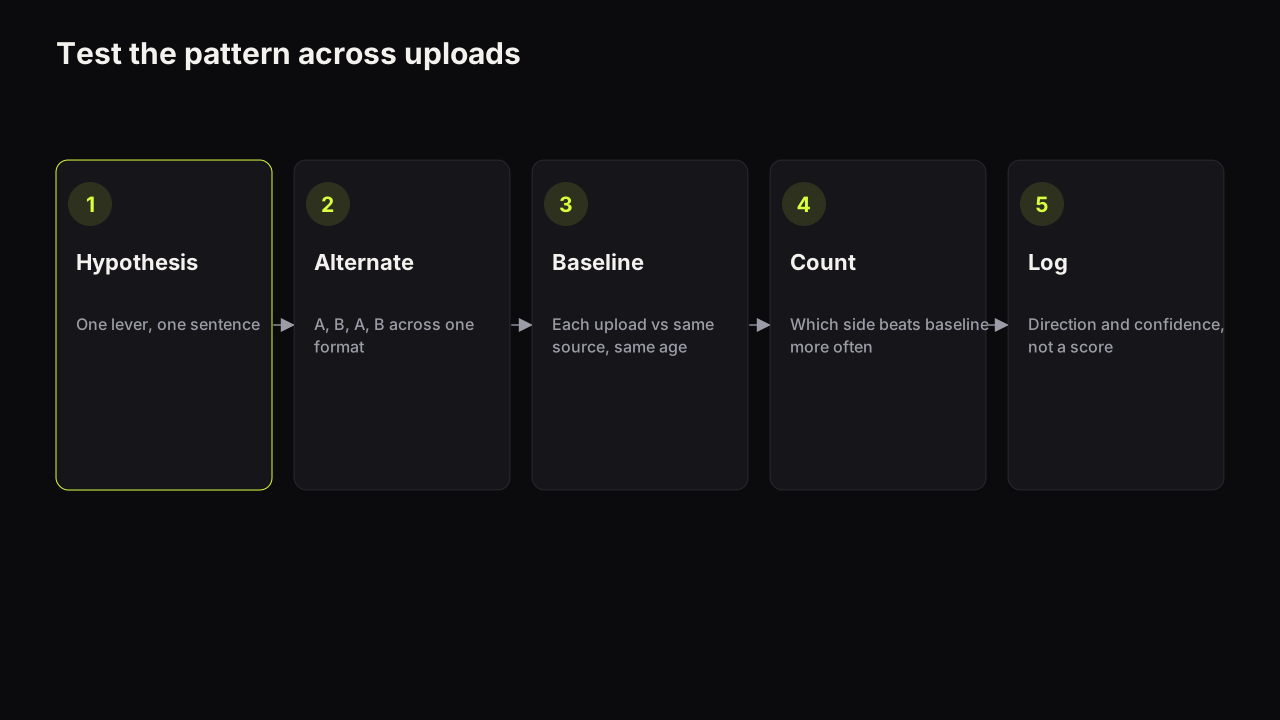
- Write one hypothesis about the channel's pattern. "Calm faces beat shocked faces on our tutorials." "A number headline beats a word headline on our reviews." One sentence, one lever.
- Pick a run of uploads of the same format. Reviews against reviews, tutorials against tutorials. Mixing formats puts the format's effect into the result.
- Alternate. A on the first upload, B on the second, A on the third, and so on. Alternating beats blocks because a topic or weekday effect lands on both sides rather than one.
- Compare each upload with your baseline, not with its neighbour. Same traffic source, same video age; how to build that baseline is the foundation. The question for each upload is "above or below what we usually get", not "better than last week".
- Count, then log. How many A uploads beat baseline; how many B uploads did. A direction that holds across the run is a lesson. A direction that flips halfway is noise, or a lever that does not matter here, and both are worth writing down.
Read average view duration for both sides as well. YouTube's tool decides tests by watch time share because a cover that earns clicks it cannot keep is a loss, and a small channel should judge its concept runs the same way; why fewer clicks can still win explains the measure.
The honest limit is that the topics differ from upload to upload, so a run needs to be long enough for the direction to repeat. That is why the hypothesis is about the pattern and not the picture: a pattern lesson transfers to every future cover, and the cost of a run is one decision per upload, which you were going to make anyway.
Rule three: use Test & Compare wherever it runs
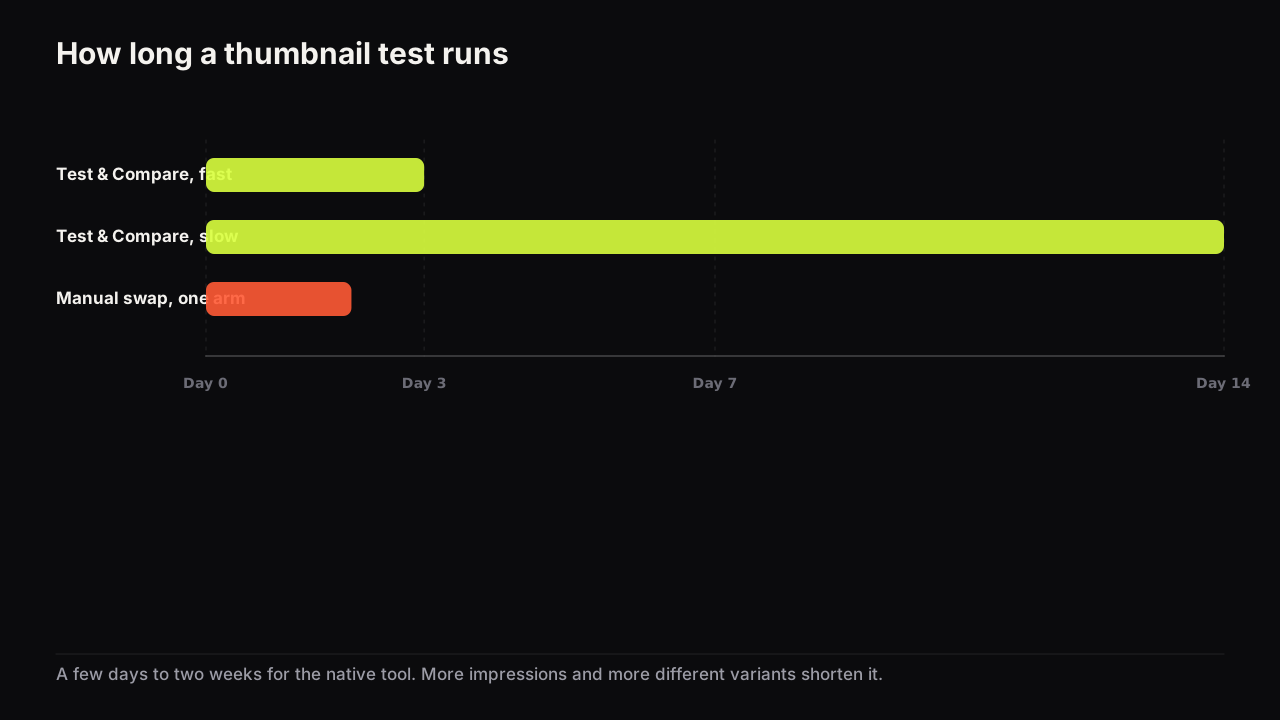
Test & Compare in YouTube Studio is the only method where YouTube splits the audience at the same moment. We would run it on every eligible video on a small channel, even though it will sometimes sit for two weeks and come back Inconclusive, because a flat result on two well-separated covers is still a line in the log, and a manual swap on the same video would have been noisier.
YouTube's help page on testing titles and thumbnails says you can test up to three titles, thumbnails, or title and thumbnail combinations per video; that the result is decided by watch time share, not clicks; that a test can take a few days or up to two weeks and resolves faster with more different variants and more impressions; and that when a test is inconclusive the first uploaded option becomes the default.
Three adjustments make the tool work harder on a small channel. Use two variants, not three, so each one gets a larger share of the viewers. Upload the cover you would be happiest shipping first, because that is the default if the test ends Inconclusive. And treat an Inconclusive or Performed the same result on two well-separated covers as a finding, not a failure: on this format, with this audience, that lever did not move anything. What to do when a test refuses to end goes through the decision. If the option is not on the video at all, the eligibility rules for Test & Compare are the list to check before assuming the channel is too small.
Reading results without fooling yourself
The rules above prevent most bad conclusions. Four reading habits catch the rest.
- Compare like with like. A rate from Browse against a rate from the channel page is not a comparison. Read the source breakdown before the blended number.
- A falling rate on rising impressions is usually distribution, not the cover. A small channel's first video to reach Home will show a lower rate than anything before it, and that is the good news; why CTR drops when a video spreads covers the pattern.
- A lesson has to repeat before it becomes a rule. One result is a hint. The same direction on the next run, or on the next eligible test, is a rule. Three times, and you stop testing that lever.
- Never call a manual gap on one pair of windows. A single A-then-B swap on a small channel is one weekday against another. Alternate, and call a result only when both pairs agree.
Borrow evidence you did not have to generate
A small channel cannot afford to test from scratch, and it does not have to. The covers that already win in your niche are evidence produced by other people's impressions, and reading them well replaces a great many tests. Studying the outliers in your niche gives you the layout, expression and headline patterns the audience already responds to; your tests then need only cover the one place you deviate from the pattern. That is a hypothesis you can test in a single run instead of a dozen.
Keep a lessons log
Every result, including the flat ones, goes into one file with one line per test. The log is what turns a small channel's slow trickle of evidence into rules, and it is the research step for every future brief.
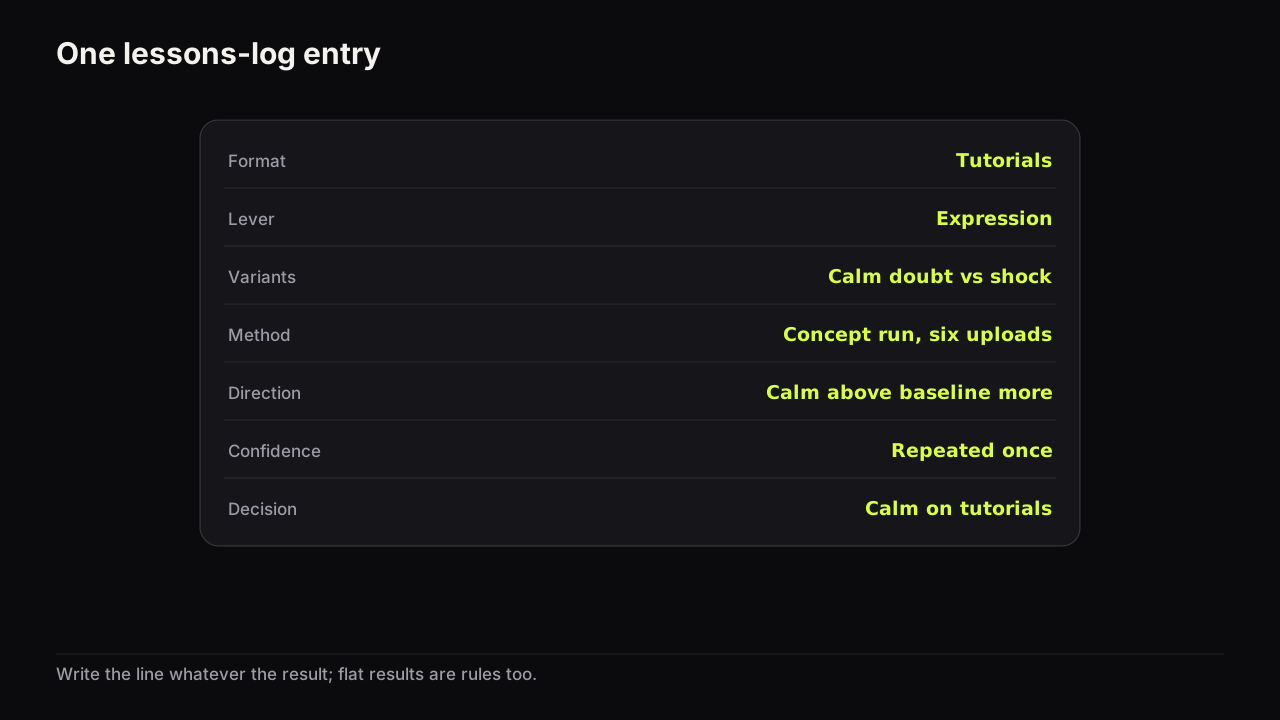
| Field | Example |
|---|---|
| Format | Tutorials |
| Lever | Expression |
| Variants | Calm doubt versus shock |
| Method | Concept run, six uploads |
| Direction | Calm above baseline more often |
| Confidence | Repeated once; not yet a rule |
| Decision | Calm on tutorials; re-run on reviews |
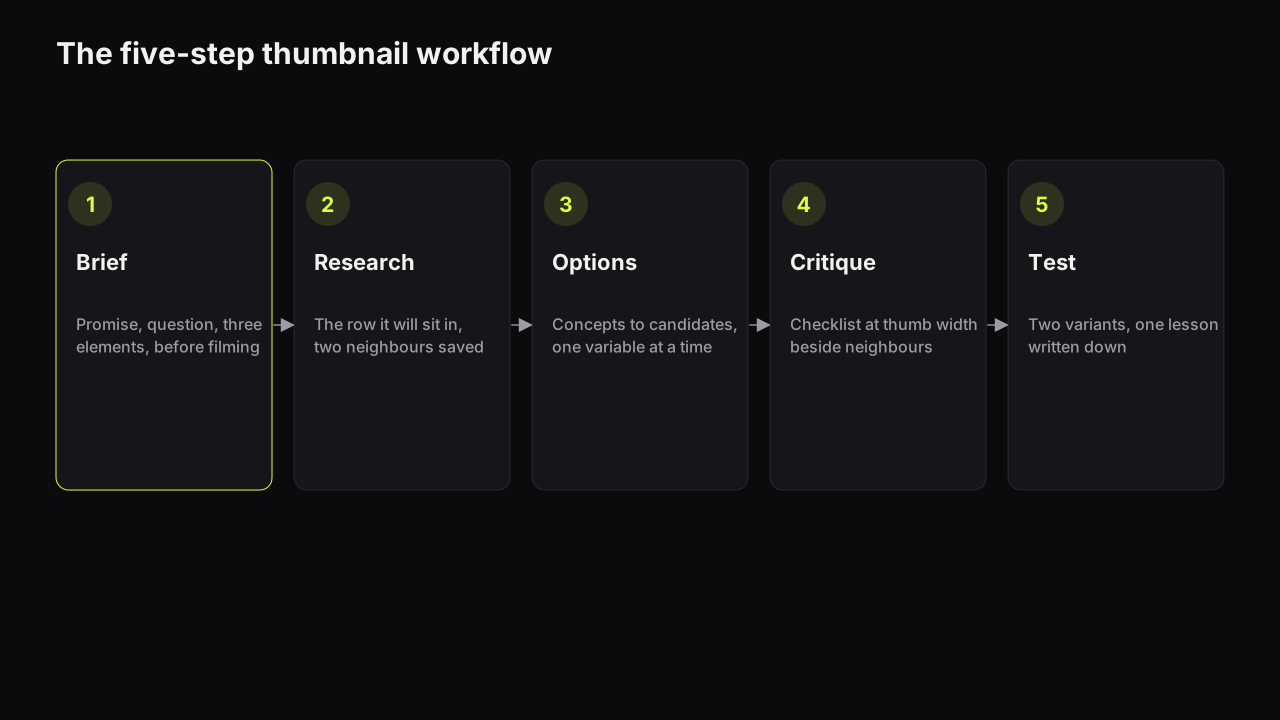
The log is the "learn" step of a repeatable thumbnail workflow, and on a small channel it is the most valuable document the channel owns, because each line cost weeks.
Making the second cover should not cost an evening, or the run will not survive contact with a busy week. On the bench, Tweak takes a finished render as the source and changes only what you name, so the no-headline version of a number cover is one render, and the calm-face version of a shock-face cover is an expression change on the finished result rather than a rebuild. Both covers in a pair then differ in the one lever the hypothesis names and in nothing else.
What to do next
- Write one hypothesis about your channel's pattern, choosing the lever you most want a house rule for.
- Pick the next four to six uploads of one format and alternate the two versions of that lever across them.
- Where Test & Compare appears on a video, run it with two well-separated variants and upload your preferred one first.
- Compare every upload with your baseline for the same source and age, count the direction, and write the line in the log whatever the result.
- Before the next run, read the niche's outliers so the next hypothesis starts from evidence rather than a guess.